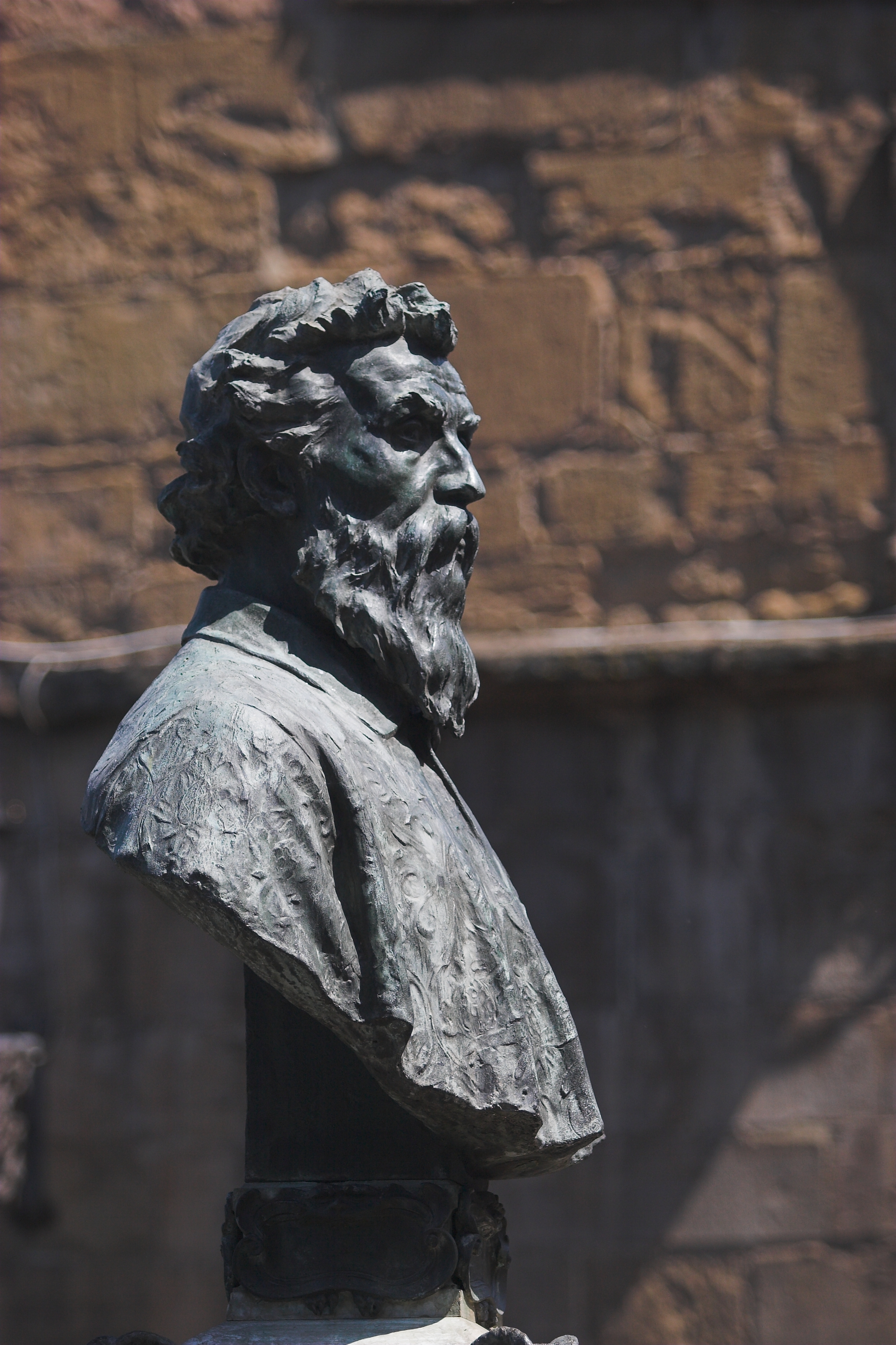
 |
| Bust of Cellini |
Instead of reading this book I listened to it through this cool app (
Audiobooks, the free ones are classics in the public domain) that lets me listen to free audiobooks read by volunteers. Normally, I am all about actually reading the book, but for an extremely long, braggy autobiography with not much deeper philosophy, I think it is okay to just listen to it (plus, I'm strapped for time and I want to read, dang it). For example, I started to listen to Virginia Wolf's
The Voyage Out and quickly stopped because I was not soaking in the beauty of her words. Now, any general novel that is an interesting story, has life truths, and/or insights would be fine in audiobook form. If the book is meant for the reader to fall into and just enjoy, an audiobook is a good way to multitask and still get the marrow out of the book. The wonderful aspect of audiobooks is that you can drive and listen and do other things while listening to a book. Multitasking is something that I love. I am always wishing I had more time to read the many, many transcending books out there and audiobooks give me that chance.
 |
| Crucifixion |
Before I started the book, I knew that
Cellini was a dastardly fellow, that he had murdered several people in his lifetime and bragged about it in his autobiography. I wanted to read this because he was an artist during the late Renaissance and that is my art historical area of focus, so I knew that it would give me insights into how an artist lived and worked during the times. Now, I hope that some of the more salacious stories told are exclusive to Cellini. He brags about his artworks, not just describes them but lauds them (according to him, his artworks are better than any that came before and done in an entirely new way every time, even exceeding the ancients while mimicking them). He blames all his murders on self defense and the other person wronging him. He boasts about the praise given to him by his employers and other people and calls anyone who does not like him an evil fellow. All in all, he is a rather bad man, but his autobiography is an important historical document to a time long past and a rather interesting read because of all the crimes and angry outbursts.
This book brings up the relationship between the patron and artist when artists were mere laborers. Cellini is often at the mercy of some powerful patron (pope, king, or rich person) much to his chagrin. For most of his life, he is not free to create what he wants. He has to create what the patron decides the subject matter should be and he never complains about it because that was the accepted method. After the subject matter is chosen, the artist is free to add his own style to it and this turns out to be very successful for Cellini according to his gloating. Numerous times, Cellini has to ask his patron if he can leave or travel, which is vastly different from the image of the wild and free artist of today. Cellini was definitely wild: he had a dangerous temper if crossed, but he was a social artist, wanting to please his patron at all times. This book highlights the different relationships and image of an artist from then to now, which allows for a comparison and for a more penetrating understanding.
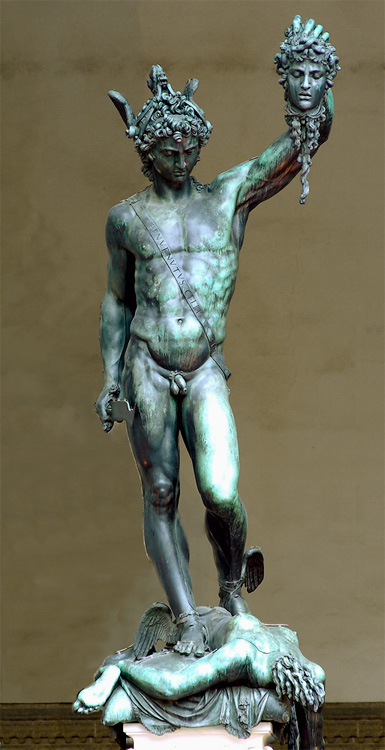 |
| Perseus with the Head of Med |
Based on my own art historical research (I wrote my undergraduate thesis on competition between Leonardo and Michelangelo), the Renaissance was an atmosphere filled with rivalries. It is only really remarkable when you think of artistic relationships today. Yes, there are certain spiteful relationships, but most artists appreciate what others are doing. They do no try to tear each other down. During the Renaissance, they encouraged competition between competent artists and this could create a hostile atmosphere to create art, which is strange considering how beautiful and idealistic most of the art was (yes, there was monsters from mythology and depictions of Christ on the cross, but most of the people were depicted idealistically, choosing the best features and putting them all together). There were less opportunities: fewer successful artists, fewer patrons, they all had to be formally trained and part of a guild before they could make money off of their art. This competitive nature may not apply solely to the Renaissance, but it is in definite contrast to what is going on now and a nice thought that we have partially put nasty rivalries behind us.
This is also about memory and how it is subject to time. Not because Cellini was necessarily wrong in his recollections, biased, or trying to hide something, but because all memories are slanted and subject to change (he probably was trying to hide something or biased towards himself, though). Memories are not just recordings of what happened. They are re-remembered each instance, time plays tricks, and we are ever changing so even our opinions of our memories alter. No group of people will remember an event they were all at the same. Memory is a wonderful and fickle tool.
 |
Salt Cellar
|
Cellini is very famous for his autobiography and for what a rascal he was. The only artwork I remember of Cellini's is the salt cellar (which having a B.F.A. in Art History and focusing on the Renaissance it is impressive that I have never heard of any of his other artworks). That is a testament to his writing prowess and his storytelling capabilities. He did lead an interesting life with many adventures, fights, tribulations, travels, famous people, and powerful mortals. Besides the art historical, historical, and literary benefits, this autobiography reiterates that the past is a pope's treasure of life lessons. By learning from past people's mistakes, we can avoid them in our own lives and just expand our horizons.
All images taken from Wikipedia.

No comments:
Post a Comment