
Fairy tales invite us to hope for a happy ending were some wonderful person appears to save us. There is something good to be said about always hoping for better and working for a happier future. But often the fairy tale teaches reliance on others and a false hope in a mythical happy ending. The average Disney movie promises love at first sight and a happy ending in which all one's troubles disappear because a mate is found. Anyone who has fallen out of love, been dumped, broken hearted, loved widely, and married knows this happy ending is unrealistic. The real world does not deal in perfections. These flat stories do not explore the wonder of love, of two people connecting on a deeper level for extended periods of time. Disney fairy tales leave out the complexity and intricateness of life which makes it challenging and rewarding.
But if one reads the original inspiration for the tales (think Grimm’s fairy tales), they portray a a darker, grittier side. In My Mother She Killed Me, My Father He Ate Me edited by Kate Bernheimer forty authors reimagine non-traditional fairy tales from many different cultures. The writers embrace the darker more depressing side but also catch the ethereal, anything goes quality of the originals. Bernheimer believes the growing interest in fairy tales (think Once Upon a Time, Beauty and the Beast, and Grimm) comes from “a growing awareness of human separation from the wild and natural world.” Humans miss being connected to nature, being amazed by the wonder of the natural world. She also gives a poetic description on the importance of these stories:
“For in a fairy tale, you find the most wonderful world. Yes, it is violent; and yes, there is loss. There is murder, incest, famine, and rot––all of these haunt the stories, as they haunt us. The fairy-tale world is a real world. Fairy tales contain a spell that is not false: an invocation to protect those most endangered on this earth. The meek shall inherit…went one of the very first stories I heard as a child. I believed it then, and still do.”
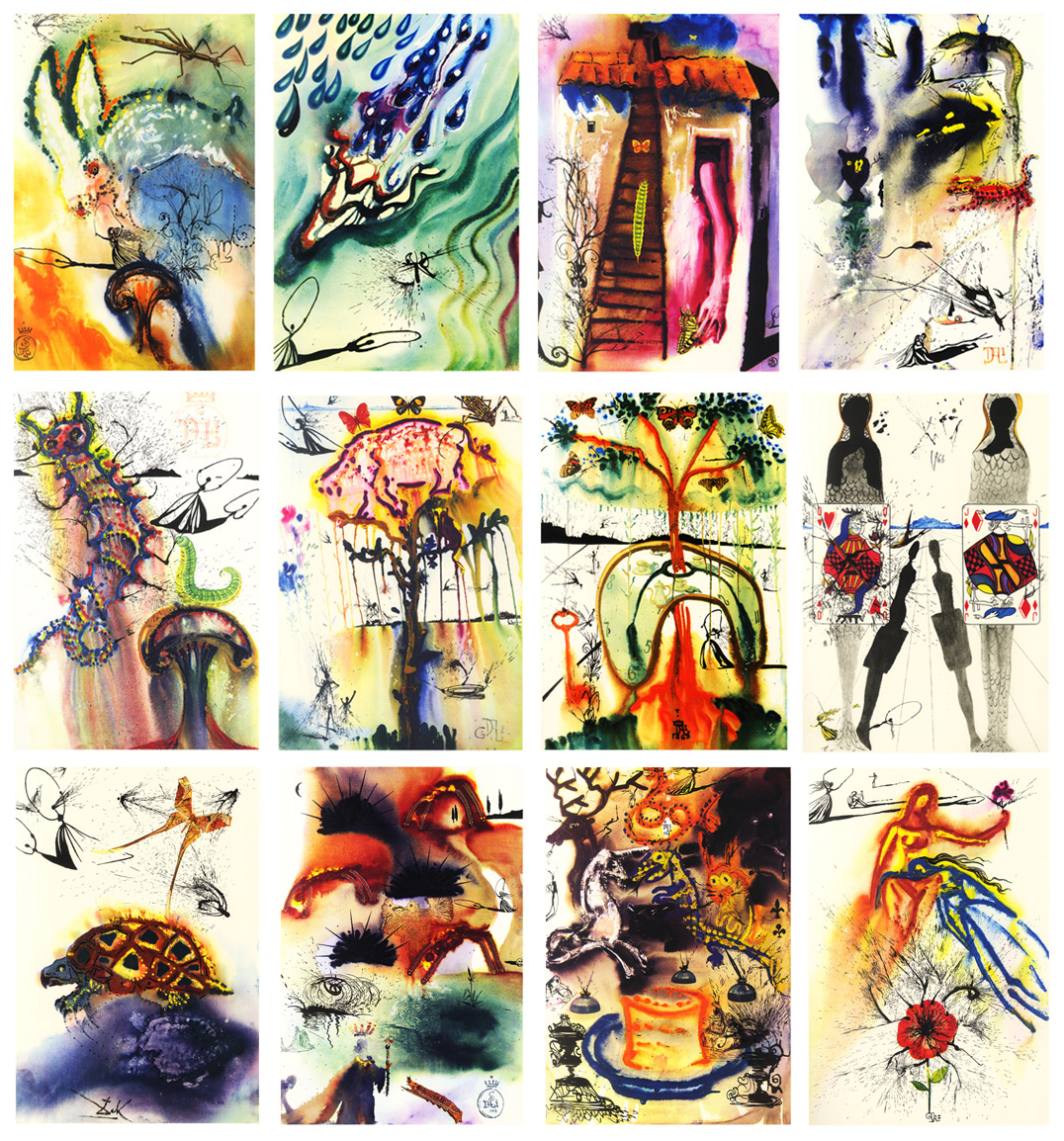 |
| Images from Salvador Dali's illustrations of Alice in Wonderland. |
One example is the tittle story about an evil stepmother and a half brother and sister. The older boy is from a previous marriage in which the mother died and the young girl is from the current marriage. The step-mother dislikes being constantly reminded of the first wife when she sees the boy so she dislikes him and forces him to do all the chores. One day the mother finds the two siblings in bed so in her anger she kills the boy. She chops him up and keeps him in the freezer and slowly feeds him to the father (who loves the new flavor in his food). The little girl is an unwilling accomplice in disposing of the body. She experiences some Tell-Tale Heart guilt so she rescues his remains and buries them under a tree next to his mother. The tree magically stitches him back together, but this doesn’t result in one big happy family. The boy leaves his family to go out into to the world, but the step-mother is out of the picture so there is a bright side.
The trope of the evil step mother reveals a child’s resistance to change in which the child fears and hates this new person in his or her life (this same resistance and discomfort also appears in adults). The child just lost a mother and now another one wants to step in. Most people would have problems with that.
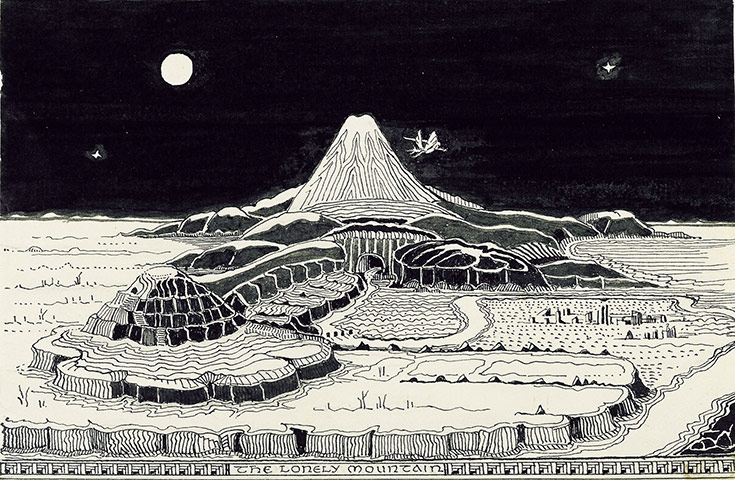 |
| J.R.R. Tolkien's illustrations for The Hobbit. |
In a world of whirling houses on chicken legs, truly murderous parents, witches, incest, genocide, talking cats, these tales don’t just spin fantastic stories but can teach us something about the fears and wonders of life. Fairy tales speak to the imagination and hope, but these new stories show we can no longer expect the world to have a happy ending. Its a good dose of reality. Hope is important, but do not wait for a prince or fairy godmother to save you. Save yourself.

No comments:
Post a Comment