Friday, July 25, 2014

Wandering Womb


Has your doctor ever prescribed sex to cure a headache?  Well, that's what most doctors during ancient through the 19th century thought was the cure for female diseases.  Women with any kind of pain, tiredness, or imbalance would visit a doctor and he would say her womb wandered around her body.  Then he would suggest sex, pregnancy, and fumigating the vagina with nice smells to bring the womb back to its rightful place.  They seriously believed the womb traveled around the body like an animal.  No seriously.  This theory is even better than the dancing babies in the womb.

From MS 399 in Bodleian Library from 1292.  Woman suffering from wandering womb.

The ancient Greek doctor Hippocrates, known for founding medicine, said the womb was like an animal.  Another ancient doctor Aretaeus said, 
It [the womb] delights also in fragrant smells, and advances towards them; and it has an aversion to fetid smells, and flees from them; and, on the whole, the womb is like an animal within an animal.”
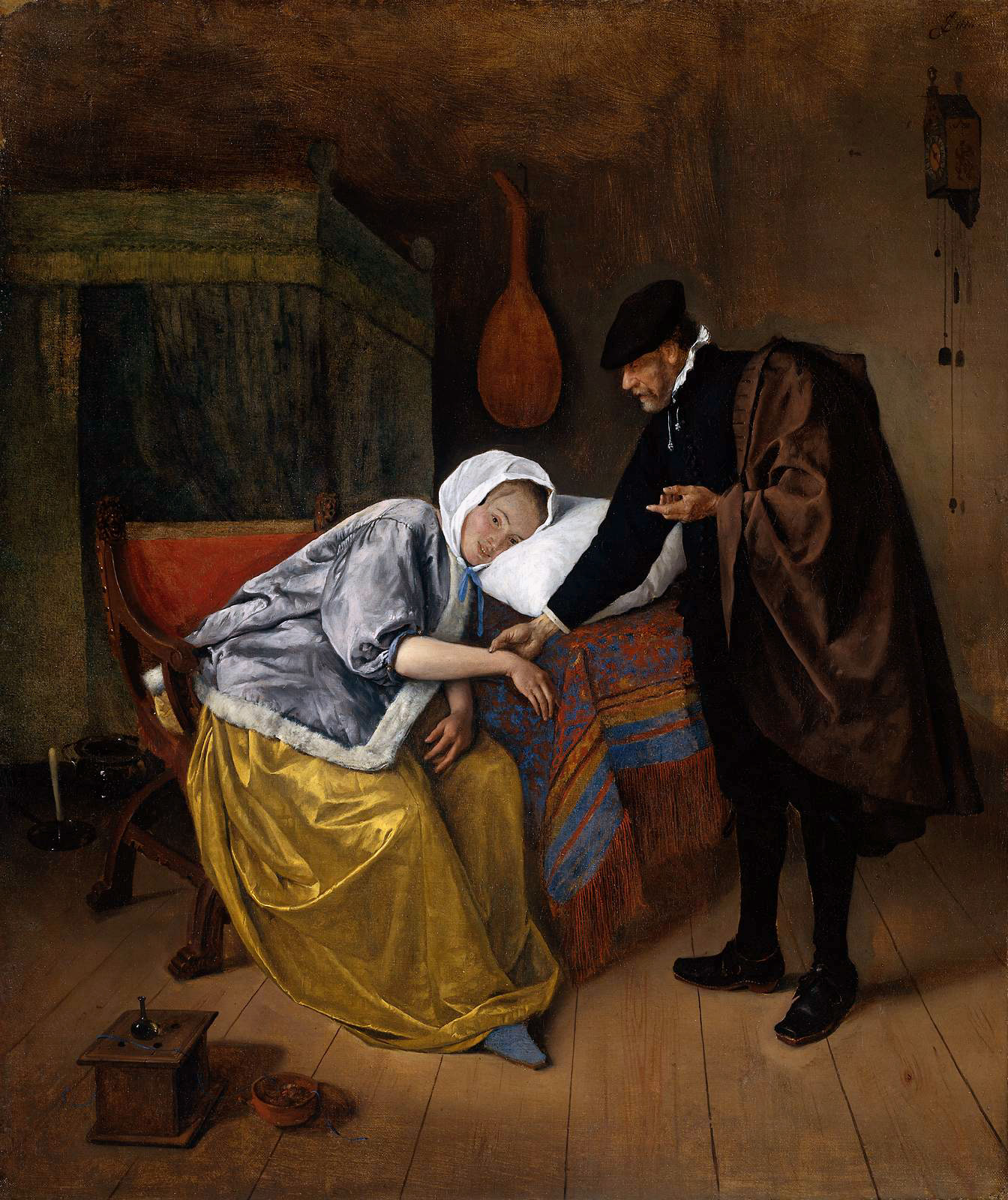
The Doctor's Visit by Jan Steen from 1600.  This woman is ill because her womb is moving about her body. The wooden box in the lower left is for fumigating her vagina.  It goes under her skirts.  

Since the womb was like an animal, it had needs and wants just like any another being.  The womb needed food and entertainment and if it didn’t have these things, it would move around searching for them.  Wandering wombs ate semen and their favorite forms of entertainment were sex and nurturing fetuses.  And additionally, like Aretaeus said the womb liked nice smells.  So if the woman was religious and wanted to preserve her chastity, the doctor may burn something that smells nice near her vagina or make her smell something really bad to chase the womb back to its proper place.  The most effective treatments were sex and pregnancy, though.  Doctors took this ailment seriously because if the womb did not return within six months, the woman would die.  
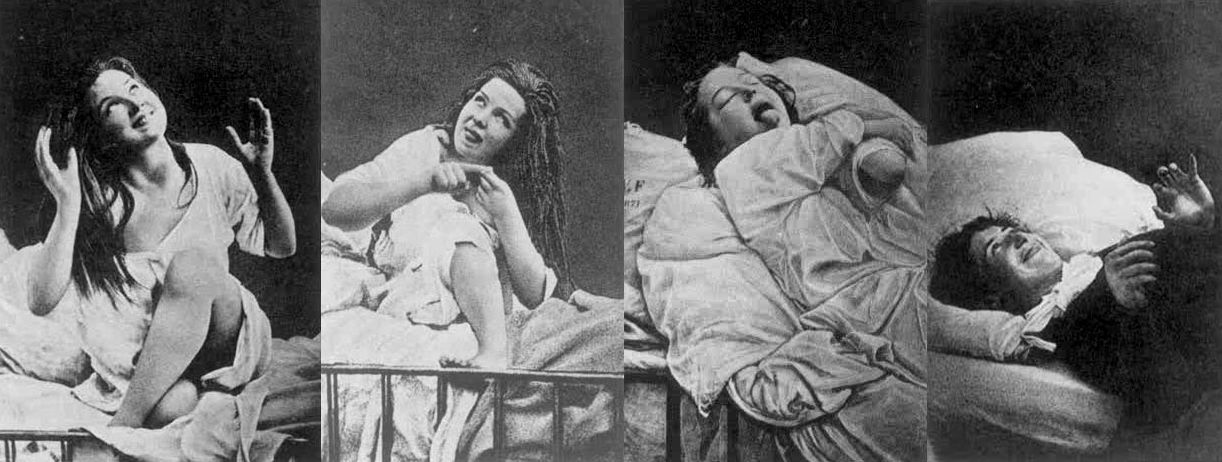
Hysterical women under hypnosis. 

This belief made it all the way to the 19th century where it became known as hysteria.  So all those images of women fainting and being revived with smelling salts come from this medical belief.  Other treatments included hypnosis, vibrating devices, and jets of water aimed at the stomach.  During the 18th century and the age of the corset, the symptoms probably came from the tight corsets women wore.  Before this time, it was basically any sickness a female suffered.  
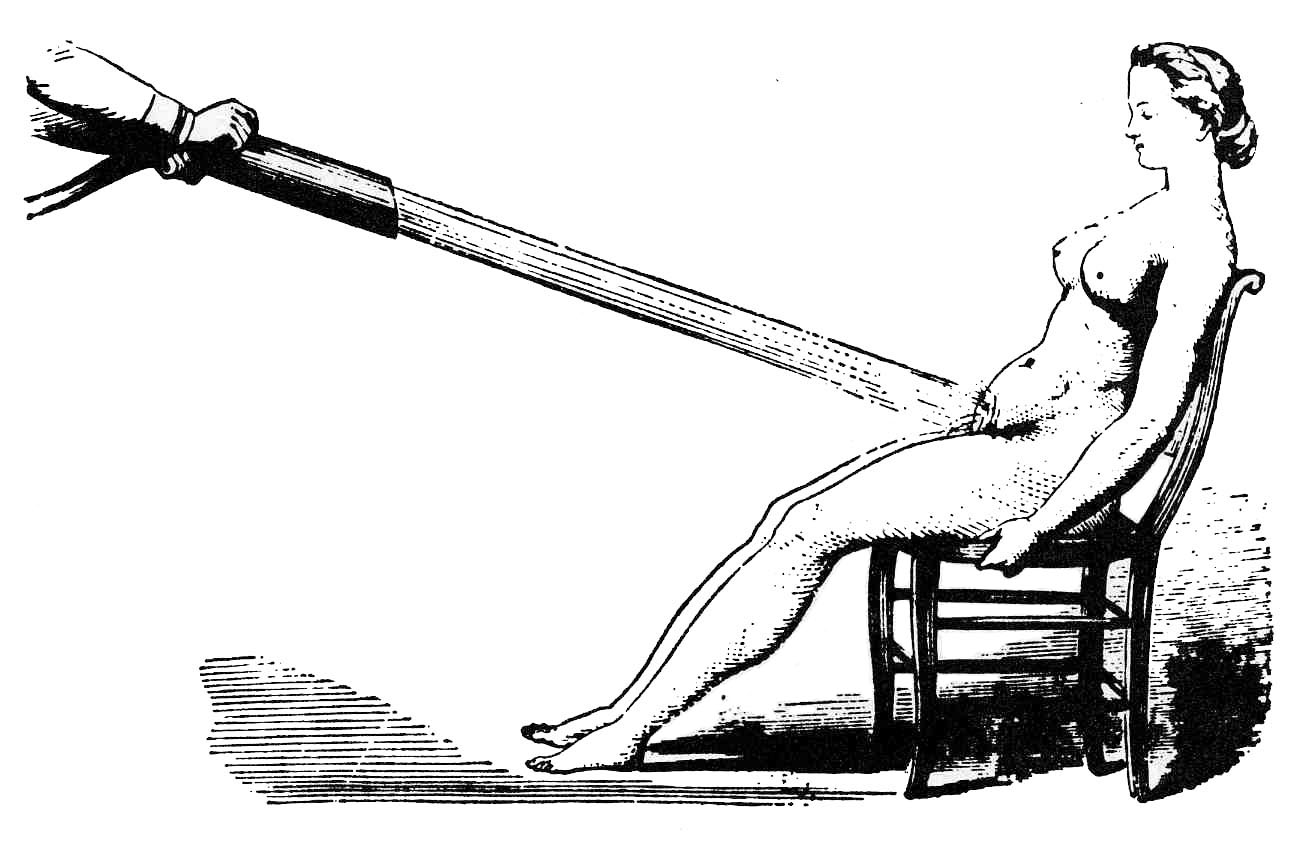

Illustration of water treatment for wandering womb. 

Up until Freud, most doctors believed the womb wandered.   Freud said even men get hysteria and claimed the problem was all in the mind, not in an animal-like womb.  

This theory kept women in check and absolutely dependent on men for their health.  Not only were all doctors men but the women needed sex and semen in order to be healthy.  Just another example of the misogyny that held women down.  

Women today can at least be thankful they do not have to worry about their wombs wandering around their bodies and causing all kinds of illnesses.  That’s one less thing we have to worry about.  

Friday, July 18, 2014

Fighting for Art History

The good news is that wisdom and knowledge do actually come with age.

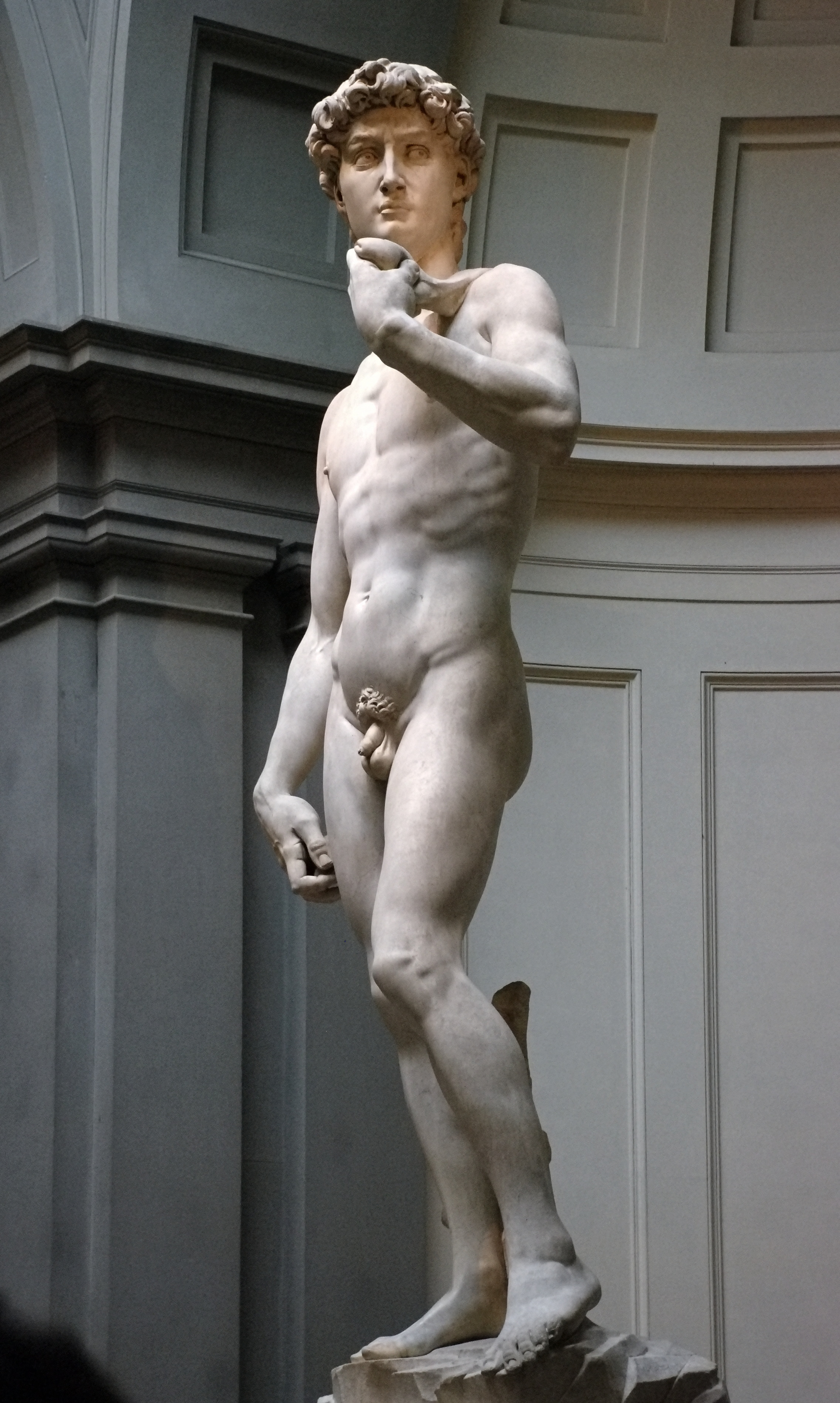
David by Michelangelo
Being from small town Alabama I have to explain what art history is almost every time I proclaim what my major was in school.  Most people still think I am just an artist and not a historian.  But also being from the South means the people are too nice to question my odd and unimportant choice, especially when you compare the abstraction of art to the very productive farming lifestyle that reigns in the country.  Because of this lack of understanding, I built an arsenal of reasons art is important.  It teaches us about the past, which teaches us about the present.  It provides a creative outlet for emotions.  It will make our souls grow.  The most important one is art reflects life.  It shows us how people live and why they struggle or seek pleasure.  Art teaches us how to live.  It is far more important than most people give it credit.  

At Syracuse’s Florence Convocation, my professor Dr. Gary Radke gave an excellent commencement address on the importance of art history.  This professor is the reason I slaved for two years in the arctic cold of Syracuse.  Dr. Radke mainly discusses Renaissance art history because that is the focus of the graduate program in Florence but his lessons and reasons apply to all art history.  His speech centers around the question and title “What Good Is a Degree in Renaissance Art History?”  Highlights from the video follow.


Dr. Radke begins by joking about the perks of getting a Renaissance art history degree: 
Let me start by giving a short and flippant answer to my question 'what good is a degree in Renaissance Art History?' It can land you a great gig in Florence.”
Travel is one of the great life enrichers.  It can take you out of your every day life and guide you to see a whole different perspective.  

He addresses the monetary reasons for receiving a degree.  He uses data to show art historians may not make the most money, but they do make money which increases as they work their way up.  He does this to devalue the material motivations and lead into some of the the real reasons:
Many people who majored in art history do not earn a great deal of money, but art history does not make you poor.  We, of course, would claim that it actually enriches both us and our society.”
He dismisses the monetary means and enters into the skills and insights art history teaches those who study it:
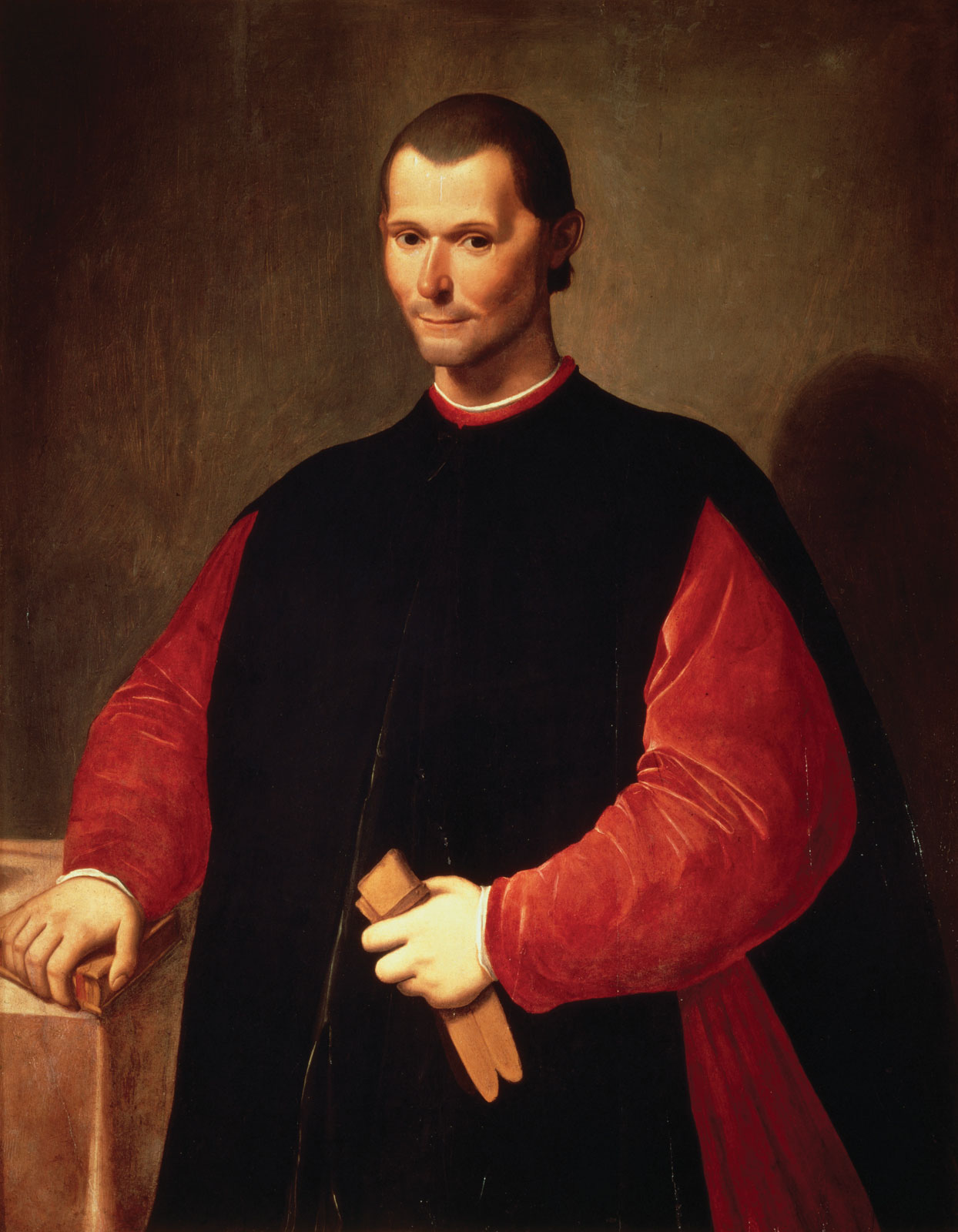
If we were to accurately and honestly address the question “what good is a degree in Renaissance art history?” We obviously need to make sure we don’t define words like ‘valuable' and ‘best' and ‘worst' primarily in monetary terms. First, I think we need to appreciate and celebrate how a degree in Renaissance art teaches us to see the world clearly and accurately.  Art historians pay attention to detail.  Not just to what is beautiful or pleasing but to how humans strategically use color, line, image, and space to manipulate one another and the world around us. Renaissance art historians are always alert to the fact that what we see and the spaces and buildings we inhabit make us feel certain things, believe certain things, sometimes buy certain things, often dismiss other things...Renaissance art historians learn both to appreciate the art and skill with which 15th and 16th century artists and politicians shaped their messages.  This was the age of Machiavelli after all. But we also take great care to resist and contest these images. We art historians unmask the structures of power.” 
Niccolo Machiavelli by Santi di Tito

We see images every day and it is important to understand how the visual affects us.  This is similar to the experiment Facebook conducted where they manipulated people’s news feeds to see the effect of positive or negative emotions on people.  Turns out we are more negative if we are exposed to the negative and more positive if exposed to positive emotions. We are easily influenced.  
Instead of just accepting these influences, art historians look at a visual image and ask why?  We do not just accept the image at face value; we want to dissect it and learn from it.  Visual images are made by people and generally every stroke, mark, shape, object is placed there for some reason and we want to find out why.  

For example take this image which provides a background for the speech:

The Last Supper by Taddeo Gaddi. Art historians ask why is John reclining in Jesus's lap?  Is it to show their close relationship?  Gaddi also doubly diminished Judas by placing him on the opposite side of the table and by making him smaller than the other figures even though perspective laws say he should be the largest because he is the closest.  Why did the artist need to diminish Judas so much?  It is so the audience will know he is the one who betrayed Jesus.  

Besides asking questions, art history teaches us to read critically:
Renaissance art history then teaches us not just to analyze the visual but to understand and appreciate the psychological and social as well. A degree in Renaissance art history also teaches people how to read critically.  In a world where words now fly around us at dizzying speed, people in art history are extremely well prepared to sort through the verbal den and ferret out what counts.  We read carefully and closely in order to learn how different people at different times looked and saw and understood things differently than we do. Reading frees us. Liberates us from myopic insular vision and inevitably enriches our own writing and communication as well.”
Reading allows people to enter into another’s thoughts and see another perspective and in turn readers empathize more.  
We treasure what we learn because we are inspired to look beyond ourselves and our own times and our own places to connect in some distinctly spiritual way with human beings who came before us and who left sweet fruits for us to contemplate and enjoy. Studying Renaissance art history changes and enriches lives.”
Vitruvian Man by Leonardo

To sum up and resolutely answer the question:
What good is a degree in Renaissance art history?  It teaches people to look creatively at the world around them.  It empowers us to embrace both the past and present. It makes us clear-eyed about how art, architecture, and everything visual can liberate and control us. It teaches us how to read and write critically and effectively.  It taps into our deepest spiritual dimension and it demands that we share our love and passion for the history and the art and the visual with others. I’m proud to say that Renaissance art historians do make mute stones speak. We give voice to the thoughts and ideas that our fellow humans wanted to record and share centuries before the days of digital reproduction, radio, or film.  In that way, a degree in Renaissance art history offers the joys of having the past continue to live through and well beyond us."

Plus, art history contains some pretty crazy images and ideas. See images about dancing babies in the womb, Medieval serial killer fashion, and books bound in human flesh.

Revisit this speech if you ever question the importance of art and the study of the past. 

Friday, July 11, 2014

Dancing, Tumbling, and Posing Babies in the Womb

I have a knack for enjoying the more salacious and little talked about aspects of art.  We may think of this as a taboo topic or even just a topic we do not literally think about much, but babies in the womb are all over the place from the political debate on abortion (stay out of my vagina) to pictures of ultrasounds posted on Facebook.  The medieval idea of the baby in the womb is pretty hilarious.  

This baby is doing yoga:


It’s going to be one calm and fit baby. (Disclaimer: this baby is probably not doing yoga. They probably don't know what yoga is in the 15th century.) Images like this one populate medieval manuscripts.  These illustrations show toddlers in the womb in silly classical poses.  I am not kidding.  This is what they believed babies were like in the womb!  The various poses do speak to their (and by ‘their’ I mean men) knowledge of the baby kicking. 


Manuscript 3701-15 created in the 9th-11th century from Muscio Medicus’ Musitio Gynaecia, a treatise on gynecology.
Before the Enlightenment, there were many interpretations on how the mysterious womb looked and functioned.  At one time they thought the uterus was the same as the penis except turned inside the body.  Another theory claimed the womb was divided into seven chambers, one for each day of the week.  This meant that up to seven babies could be born from one pregnancy.  


Notice these last two wombs have horns.  This is because doctors would autopsy animals and they just applied the structure to those uteri to humans.  
     
Another theory held on to the chamber idea but said there was only two: one for males and one for females.  They later adjusted it to accommodate a third chamber for hermaphrodites. 

Then the magnificent Leonardo came along and gave history this image:


It is slightly more accurate, but it was only a sketch and not seen outside Leonardo’s circle of friends.  So the ideas did not spread.  Historical gossip says Leonardo fished a drowned pregnant woman out of the Arno River in Florence and snuck her to an underground room to autopsy.  He had to keep it secret because it was against church law to cut open an innocent person because the body needed to be whole for the last judgment.  

Any knowledge of the human body came from very stiff public autopsies of executed criminals.  The doctor would read from a book which told what to do and a barber (because they were good with their hands and had similar utensils) would do the dirty work.  Any movement outside the book was not allowed.  

Imagine the terror of being caught Leonardo went through to acquire this image.  Imagine the stench of the decaying body, not on ice and probably in a closed stuffy room with no windows.  This image is a big deal for history because Leonardo experimented with the body and was able to view things most doctors never dreamed of.  

Renaissance artists dared to slice open the truth in their pursuit to realistically depict nature.  To accurately draw something, you had to understand it.  A true Renaissance man/woman is insatiably curious about all aspects of life.  A trait our focus-on-one-field culture needs to take into consideration.  Should we know a lot about a little or a little about a lot?  

For one, my curiosity knows very few limits (one being math, but if someone could explain how it works in the real world, I might like it).  Despite the saying "curiosity killed the cat," wonder is a good trait.  Diving into the mysteries of the female body just teaches people how it works and that leads to better health for females.  Diving into any mystery may have it's risks, but greater knowledge for all is usually the reward.  


Friday, July 4, 2014

Stars Falling from the Sky: Art History of Fireworks


Today, people in the United States celebrate the 4th of July typically with fireworks, cook outs, and drinks.  This yearly celebration occurs on the day we announced our independence from Britain.  In 1776, they marked this day with fireworks and we do the same today.  
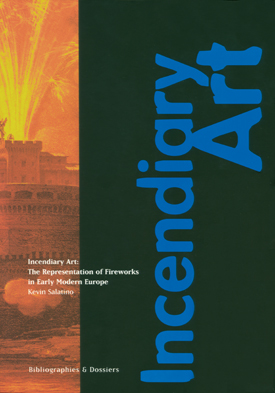
     For this holiday I read a Getty Museum catalog called Incendiary Art: The Representation of Fireworks in Early Modern Europe by Kevin Salatino (this is a FREE ebook and you can check out some more from the Getty).            

Fireworks are old, like 200 B.C. kind of old.  Rumor has it the Chinese developed the first firework, but India also had them pretty early on, so its up in the air.  The Chinese used the technology for weapons and rituals to keep away bad spirits, purely serious means.  But sometime during the Middle Ages trade increased with China and Europe figured out how to make fireworks as well.  Of course, they turned the pretty bangs of flowers into celebrations usually for weddings, births, victories, peace treaties, arrivals of important people, and even a king recovering health.  They turned fireworks into a giant spectacle often involving actors and elaborate narratives (something we are seriously missing today).  From the 15th to the 18th century these spectacles were part of Europe's celebrations, basically propaganda for the ruling party: 
"It is a crucial commonplace that courtly festivities served above all to exalt the principals of monarchy and dynasty, to demonstrate power through expenditure, and the underline the fundamental distinction between the court and the rest of society."  

The propaganda only reached a wider audience through prints and illustrations of these events sold to the public.  These images were often twice removed from the actual event because they might be drawn ahead of time or copied from another artist.  


Spectators often became part of the show as disaster stuck reigning down fire.  

One eye witness from London named Horace Walpole writes: 
"The rockets and whatever was thrown up into the air succeeded mighty well, but the wheels and all that was to compose the principle part, were pitiful and ill-conducted with no change of coloured fires and shapes: the illuminations was mean, and lighted so slowly that scarce anybody had patience to wait for the finishing; and then what contributed to the awkwardness of the whole, was the right pavilion catching, and being burned down in the middle of the show...Very little mischief was done, and but two persons were killed: at Paris there were forty killed, and near three hundred wounded, by a dispute between the French and Italians in the management, who quarreling for precedence in lighting the fires, both lighted at once and blew up the whole."

Just as often the audience appears bored by the fireworks.  They have seen this sort of spectacle many times before.  


But for all the danger and boredom, fireworks held a special place in society.  In the 18th century one play-wright wrote a encyclopedia entry naming fireworks as art:
"In all the Arts it is necessary to paint.  In the one that we call Spectacle, it is necessary to paint with actions."

This art served a purpose:
"A history of the early modern festival is a history of the frequently tense dialogue that characterized its negotiation between, among other things, the real and the fictive, the earthly and the celestial, urban space and sacred space, citizens and regent, city and empire.  That these negotiations were often successful in alleviating that inherent tension is a testament to the power of artifice." 

These events functioned on a political level: appeasing the citizens, showing of a monarch's grandeur, celebrating hard won victories. 

Some daredevils went a little too far with the fireworks spectacle and their daring feats turned into cautionary morals:
"'He who climbs high has far to fall, and he who loves danger will die in danger.' Thus, the 'famous surgeon' Dr. Carl Bernoju 'in a display of recreational pyrotechnics as artistic as it was wanton,' transformed himself into a human firework by means of 'many firecrackers and small rockets tied to his body and limbs, even on all his fingers.'...Dr. Bernoju descended a long rope, engaging in acrobatics as he self-immolated ('looking more like a burning devil than a man').  The spectacle ended, of course, in disaster, as the print demonstrates in a continuous narrative technique in which the doctor is pictured twicestill attached to the rope at the beginning of the routine, and in a pool of fire and smoke and broken limbs on the pavement below." 


This firework display served as a moral lesson to those who dared climb too high, to not be full of hubris. 

Another moral extracted from fireworks is the reminder of death.  Just like fireworks which reach high into the sky only to rain back to the earth extinguished, so too humans will eventually die:
"fireworks, whose brilliance so rapidly extinguished may here function as a kind of momento mori..."

But we in the U.S. would rather celebrate today with happiness and joy that we broke free and are known as a free country.  Hopefully, today we can band together and enjoy a shared love of being American.  

Throughout history fireworks have mesmerized, delighted, and even bored humans.  Fireworks are part of those few moments in life where a person is present in that exact moment without having to force themselves to focus.  Even if you've seen fireworks a thousand times, you still become mesmerized by the loud bangs, flashed of light and color, the shapes, and the ephemeral nature of the spectacle.  There in a moment the next falling out of the sky.   People watch waiting to see what shapes and color will appear as if by magic.  

But we know it is science pure and simple advances in technology and understanding the world.  Couple this day with a short explanation of the Chemistry of Fireworks.