Thursday, November 20, 2014

Raised in a Graveyard


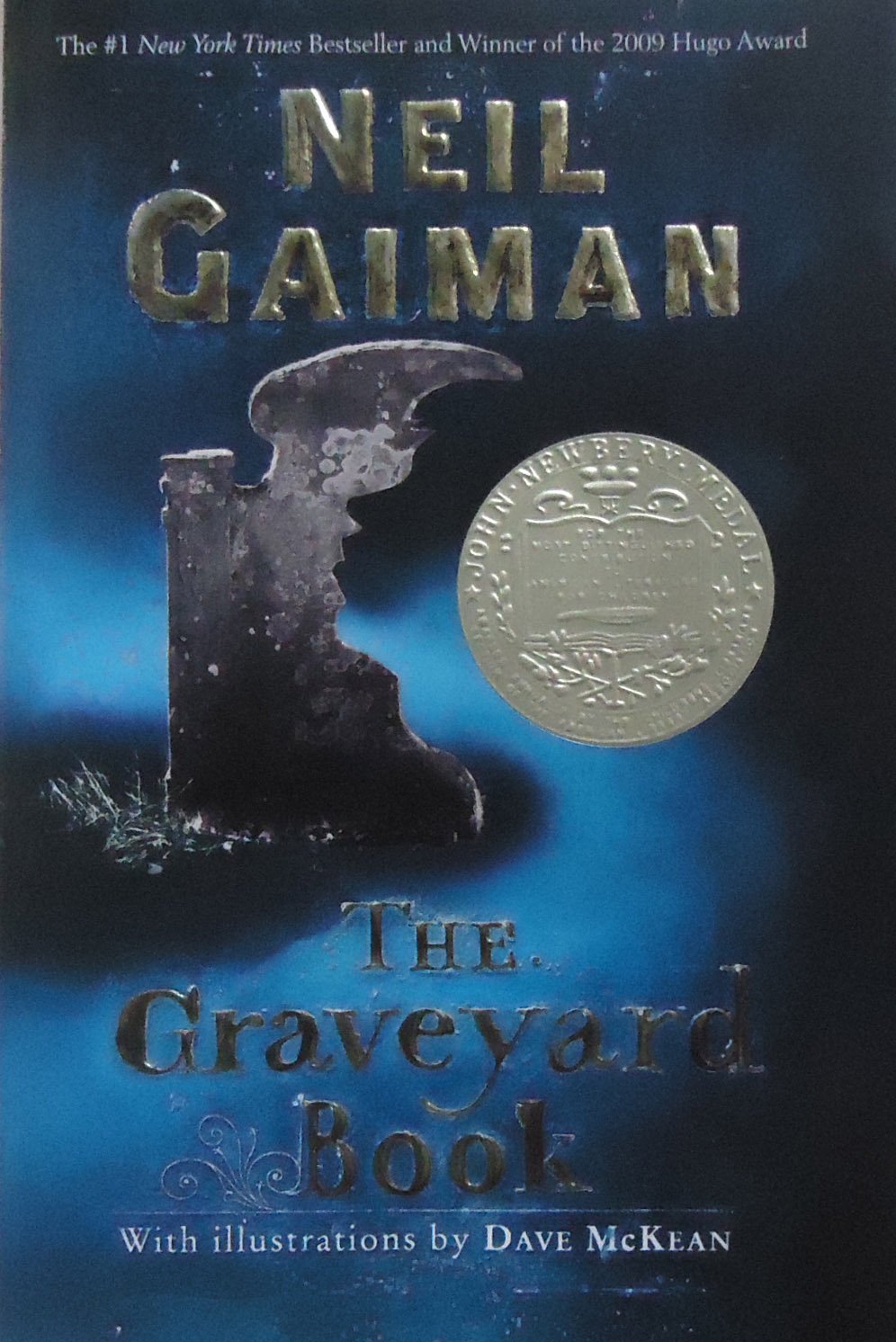
This book is about forward motion, about growing up and having hopes and dreams. The Graveyard Book begins with a family’s gruesome murder. All but the baby, the reason for the massacre, die.  The precocious toddler survives because of his curiosity.  He walks out the front door because it has never been wide open for him and he wondered what was out there.  Ultimately, he ends up in a foggy graveyard populated by ghosts, the dead trapped by the bounds of the graveyard for eternity always the same as the day they died.  A kind, motherly woman takes him in and fights for his acceptance in the graveyard since raising a human child is unheard of.  Outsiders can’t even see the ghosts unless they are given the freedom of the graveyard, which is another rarity, but it has been done once before.  


Illustration from the book by Dan McKean.

     Even in death the ghosts have a social hierarchy.  The longest dead are the most important and their opinions carry the most weight.  The oldest man dates back to the Roman occupation and he is against raising the child.  There are a number of reasons this will not work: they cannot leave the grounds for food and supplies, no proper living place, and the all important one is dead people raising a child.  See the whole being stuck exactly the way you died is no way to raise a child.  The dead have no goals.  They exist in a grim mimic of life, where their day is night, no eating, no jobs, but they do socialize.  Plus, the child could only play with children ghosts, which makes for a lonely existence.  


Personal photography by Charity Troy.  Taken in a Syracuse, NY graveyard.


     A mysterious man steps into the argument and advocates for the child staying because he is in danger.  This figure is allowed to leave the graveyard and he promises to take care of the child’s outside needs.  He becomes a guardian and mentor to the renamed Nobody Owens, Bod for short.  The boy has two parents and as good older parents, they protect him from scary truths like why he is not supposed to roam certain overgrown areas of the graveyard or why he’s not supposed to talk to a witch inhabitant.  But the guardian gives Bod straight answers and doesn’t keep things from him.  His parents lies usually lead to curiosity and then trouble anyway.  


Another illustration by Dan McKean.
     The boy goes on several adventures some normal, mostly supernatural.  Despite being mostly free to do what he wants, he pleads to learn, so his mentor brings him books and teaches him to read.  Bod has various homeschool teachers until he finally pleads to go to real school where adventures ensue and he takes on a bully.


By Charity Troy

     Bod cannot know any living person because he is in danger although no one knows why except the guardian.  I will not spoil the book any further.  You will jus have to read to find out why Bod was in danger and experience his adventures of being raised in a graveyard.


By Charity Troy


     Neil Gaiman turns the sadness of death into an acceptable reality with a comfortable afterlife.  This book gives a child (and even adults) a nice little afterlife to imagine all their family and friends.  It shoves death in the reader’s face from the very beginning and makes death an unavoidable life occurrence which doesn’t need to be incredibly sad.  This book is all about death, but really more about life and growing, being free to explore and learn.  


By Charity Troy


     This story is about curiosity saving a child. The boy just escapes death because he is curious about what is on the other side of a door and he keeps wandering, just taking in everything but the danger because, you know, he is a baby.  Nobody’s curiosity spills over into the joy of reading as an escape from loneliness (something this only child knows something about).  His curiosity takes him into an ancient tomb where he discovers the true oldest inhabitant of the graveyard going all the way back to the Druids.  This knowledge eventually saves his life and makes for a happy-ish ending.  This endless sense of curiosity not only takes Bod on adventures but gives him something to hope for, which serves to give a person purpose.  Being curious means you are not letting life pass you by like what the dead have to endure.  A curious person sees something out of the ordinary or interesting and a really good curious person finds out more.  This curiosity is essential to succeeding at anything because if you are not interested you will not engage, won’t enjoy the process, and will not take any knowledge or lesson from the experience.  Even graveyards are good places to explore because there are hundreds of unique and often important people buried there.  Each person experiences their own struggles of light and dark, which makes the past and present world interesting and worth the adventure.  Keep wondering and wandering. 

And to top of this post, a painting I did in honor of graveyards everywhere:


Thursday, September 25, 2014

My Mother She Killed Me, My Father He Ate Me: Reimagined Fairy Tales


Fairy tales invite us to hope for a happy ending were some wonderful person appears to save us.  There is something good to be said about always hoping for better and working for a happier future.  But often the fairy tale teaches reliance on others and a false hope in a mythical happy ending.  The average Disney movie promises love at first sight and a happy ending in which all one's troubles disappear because a mate is found.  Anyone who has fallen out of love, been dumped, broken hearted, loved widely, and married knows this happy ending is unrealistic.  The real world does not deal in perfections.  These flat stories do not explore the wonder of love, of two people connecting on a deeper level for extended periods of time.  Disney fairy tales leave out the complexity and intricateness of life which makes it challenging and rewarding.  

     But if one reads the original inspiration for the tales (think Grimm’s fairy tales), they portray a a darker, grittier side.  In My Mother She Killed Me, My Father He Ate Me edited by Kate Bernheimer forty authors reimagine non-traditional fairy tales from many different cultures.  The writers embrace the darker more depressing side but also catch the ethereal, anything goes quality of the originals.  Bernheimer believes the growing interest in fairy tales (think Once Upon a Time, Beauty and the Beast, and Grimm) comes from “a growing awareness of human separation from the wild and natural world.”  Humans miss being connected to nature, being amazed by the wonder of the natural world.  She also gives a poetic description on the importance of these stories:
For in a fairy tale, you find the most wonderful world.  Yes, it is violent; and yes, there is loss.  There is murder, incest, famine, and rot––all of these haunt the stories, as they haunt us.  The fairy-tale world is a real world.  Fairy tales contain a spell that is not false: an invocation to protect those most endangered on this earth.  The meek shall inherit…went one of the very first stories I heard as a child.  I believed it then, and still do.” 

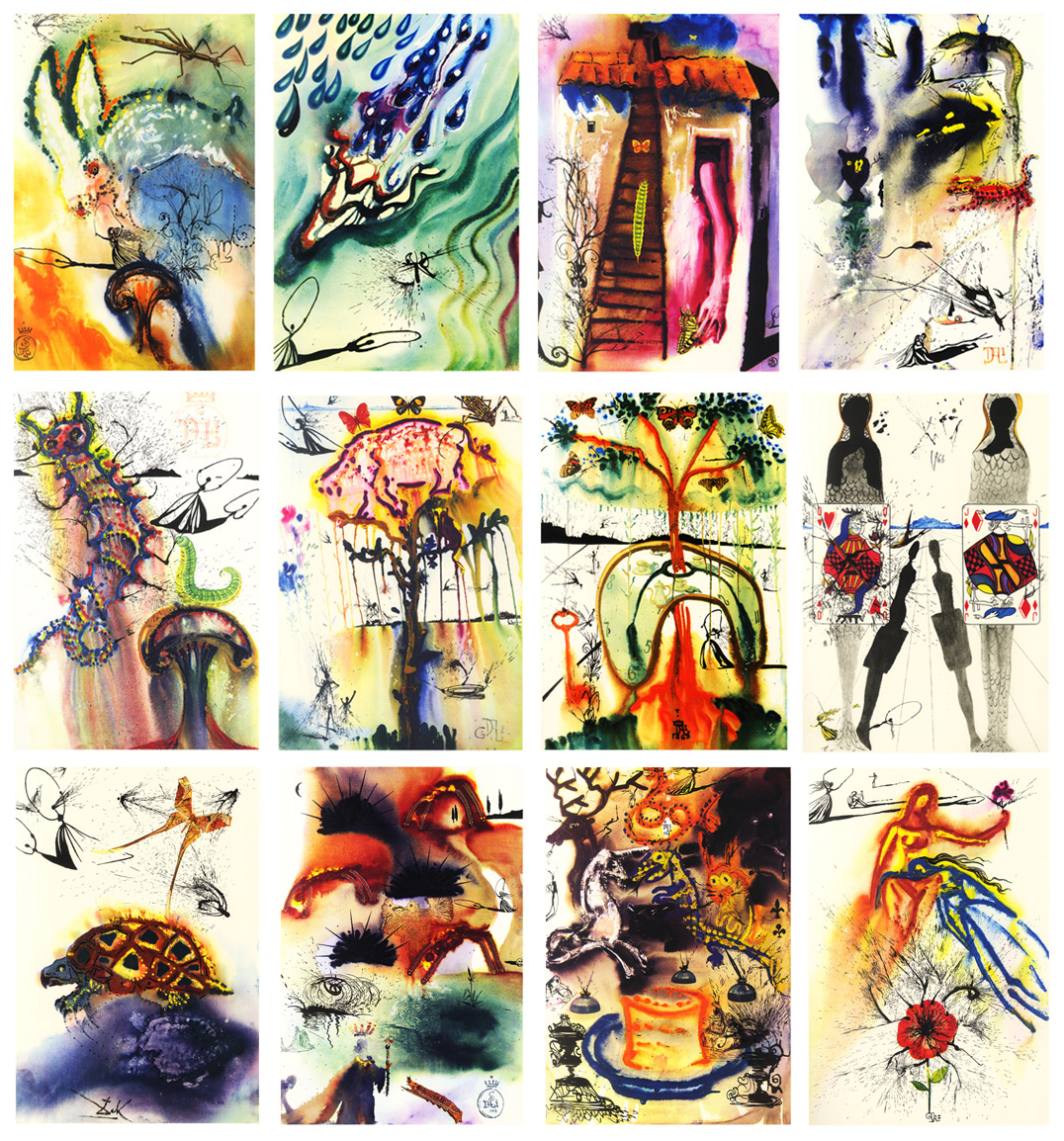
Images from Salvador Dali's illustrations of Alice in Wonderland.


     One example is the tittle story about an evil stepmother and a half brother and sister.  The older boy is from a previous marriage in which the mother died and the young girl is from the current marriage.  The step-mother dislikes being constantly reminded of the first wife when she sees the boy so she dislikes him and forces him to do all the chores.  One day the mother finds the two siblings in bed so in her anger she kills the boy.  She chops him up and keeps him in the freezer and slowly feeds him to the father (who loves the new flavor in his food).  The little girl is an unwilling accomplice in disposing of the body.  She experiences some Tell-Tale Heart guilt so she rescues his remains and buries them under a tree next to his mother.  The tree magically stitches him back together, but this doesn’t result in one big happy family.  The boy leaves his family to go out into to the world, but the step-mother is out of the picture so there is a bright side.  
     The trope of the evil step mother reveals a child’s resistance to change in which the child fears and hates this new person in his or her life (this same resistance and discomfort also appears in adults).  The child just lost a mother and now another one wants to step in.  Most people would have problems with that.  

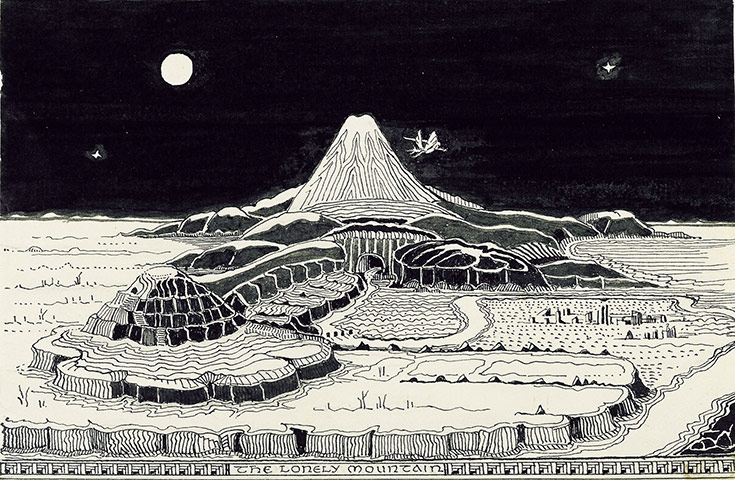
J.R.R. Tolkien's illustrations for The Hobbit.

     In a world of whirling houses on chicken legs, truly murderous parents, witches, incest, genocide, talking cats, these tales don’t just spin fantastic stories but can teach us something about the fears and wonders of life.  Fairy tales speak to the imagination and hope, but these new stories show we can no longer expect the world to have a happy ending.  Its a good dose of reality.  Hope is important, but do not wait for a prince or fairy godmother to save you.  Save yourself.  

Friday, August 15, 2014

Of Magic and Impotence


A woman knocks on a wooden door.  When no one answers, she turns the knob and enters the empty house while looking over her shoulder.  She heads for the mattress and places a dirty needle in it.  Then, she leaves as quietly as she came with a smirk on her face.  Unlike the Three Bears, the owners of the house return to no Goldilocks.  Instead, the newly married couple are unable to consummate their marriage; the man cannot get it up.  For several months they try to have sex with more and more frustrating attempts.  They hadn’t hoped for a fairy tale love, but they did hope for contentment and children.  The man is fairly young and could get it up before he married.  Each started eyeing other lovers.  Their unhappiness began to show every time they went out in public.  At the local tavern, in the market, every one knew.  The husband’s wandering eye lands on a shop girl, but he is worried he’ll have the same problem.  He risks it and finds out he is not impotent all the time.  After months of disappointing tries, the couple fear an ex-lover turned witch caste a spell on their marriage. 
     
Roped Penis from Ms 25526, National Library of France.  Marginal illustration of The Romance of the Rose.

     Since they live in the middle ages when the Catholic Church ruled Europe, they were not allowed to get a divorce at least not until three years of marriage.  One solution was to go directly to the source and find out what kind of magic the witch used.  There were all kinds of impotence magic ranging from placing a heart wrapped in a bull's testicle under the bed, placing the halves of a acorn on opposite sides of the road and having the lovers walk past, to enchanting a lock and key and throwing them down separate wells.  All of these examples could be reversed by removing the objects from the bedroom (besides wouldn't a heart wrapped in a testicle begin to smell?), putting the acorn back together, and retrieving the lock and key from the wells.  A good rule of thumb was to attempt sex in another bed and see if it worked, then the couple could just find whatever was in their bedroom and remove it.  Sometimes magical impotence was harder to cure because the witch could die and leave no clue as to how she (all but one case of impotence magic derives from a female, usually a very jealous lover) caste the spell. 
     All these salacious stories dealing with medieval impotence magic are collected in Magic and Impotence in the Middle Ages by Catherine Rider.  In this book, she argues for the importance of impotence magic during the middle ages and how it was mainly related to marriage laws.  She uses various sources from pastoral sermons and guide books to law documents, commentaries, religious texts, theological debates, magic books, and medical texts.  All the records of impotence magic debate whether or not the couple could divorce.  Many thought the magic was temporary so the couple should stay together, but sometimes the couple never could shake the evil magic from their marriage.  But if the impotence was permanent, they further debated if the couple could remarry after a divorce.  Some said the cursed man could remarry but not the woman.  It's all very murky when trying to nail down laws about magical impotence (it's usually not just regular medical impotence).  These records and debates show impotence magic was common enough that laws needed to be made to deal with the problems it brought up. 
     Law makers and theologians were not the only ones who discussed impotence magic.  Learned books on magic talked about the ways it happened and how to cure it.  Even medical writers mentioned impotence magic as a last resort in trying to cure impotence, so the belief in magic was widespread during the middle ages as evidenced by the witch burnings during the Inquisition.

Phallus Presentation from Ms 25526, National Library of France.  Marginal illustration of The Romance of the Rose.
     Returning to the first couple.  Once they suspected witchcraft they searched the bedroom for the bewitched object, but never found the needle.  They did attempt sex outside of their bed and were able to finally enjoy themselves.  They searched the man’s past lovers to see if they could break the spell, but they never flushed out the witch.  
     Years later their daughter prepares to marry a man she does not know.  All the fear and worry is on her face.  She only knows him through his cheater reputation.  While she dresses for the small ceremony, her grandmother slips into the room.  The old woman has a reputation for being wise but a little eccentric.  There are quiet rumors she is a witch.  The old lady gives the girl a look of love tinged with worry and understanding.  Her expression quickly changes to business.  
     “Now deary,” said the old woman, “ I know you are worried about this marriage, especially his cheating heart.  Most people would tell you to turn a blind eye to his bad behavior, but not me.  I’ve got some tricks up my sleeve for you.”  
     And as she said “sleeve” she pulled a piece of paper out of her’s.  It had ingredients and rhyming words on it.  The note nor the grandmother said what the spell would do, but the girl knew it was something to do with cheating men.  The girl was fearful of magic because the law would prosecute practitioners by burning them, the church forbad it, and it was a dangerous power (rumors spread about spoiled spells killing people and the consequences of choosing magic to solve problems).  But she didn’t throw the paper away.  She stored it for years until she almost forgot about it.  
     She married the man and for a while they were fairly happy.  As long as she did what he said, they were content.  Until one night he did not come home.  She imagined him dead in a ditch and her having to live with her parents again or even worse his parents. He came home the next afternoon like nothing happened.  After that, their contentment dwindled and he didn’t come home many nights. This pattern continued for a while until the girl could not take it anymore.  She fought and screamed, but that only drove him farther away into other’s arms.  At least that is what the other townspeople said, but they forgot he was a cheater before he married.  
     She finally came to a breaking point so she pulled out the lining in her plain jewelry box and there sat the spell.  One of the many nights he did not return home, she bought the ingredients and said the words not knowing what it would do.  He came back very grumpy the next day.  The bad mood continued for weeks and he started staying home more.  After months of frustration he finally discovered he could only have sex with his wife.  He was furious at his wife for a while and blamed her for his problems, but he never found any proof so they lived happily ever after.  Sort of. 

Witch's Sabbath by Parmigianino in 1530. 
                                                     
All the accounts of impotence are rooted in a jealous woman’s attempts at revenge.  All these accounts came from the mouths of men fearful of independent women and of the mysterious magic that kept them from enjoying themselves.  The problem with believing in magic and miracles is often those explanations hide the real physical problem behind them.  

Lessons from history:
1. Never anger a witch.
2. Be faithful or you just might lose a body part.
3. Keep your jealousy in check or you might get burned at the stake. 
4. Be open to other explanations. 

Friday, July 25, 2014

Wandering Womb


Has your doctor ever prescribed sex to cure a headache?  Well, that's what most doctors during ancient through the 19th century thought was the cure for female diseases.  Women with any kind of pain, tiredness, or imbalance would visit a doctor and he would say her womb wandered around her body.  Then he would suggest sex, pregnancy, and fumigating the vagina with nice smells to bring the womb back to its rightful place.  They seriously believed the womb traveled around the body like an animal.  No seriously.  This theory is even better than the dancing babies in the womb.

From MS 399 in Bodleian Library from 1292.  Woman suffering from wandering womb.

The ancient Greek doctor Hippocrates, known for founding medicine, said the womb was like an animal.  Another ancient doctor Aretaeus said, 
It [the womb] delights also in fragrant smells, and advances towards them; and it has an aversion to fetid smells, and flees from them; and, on the whole, the womb is like an animal within an animal.”
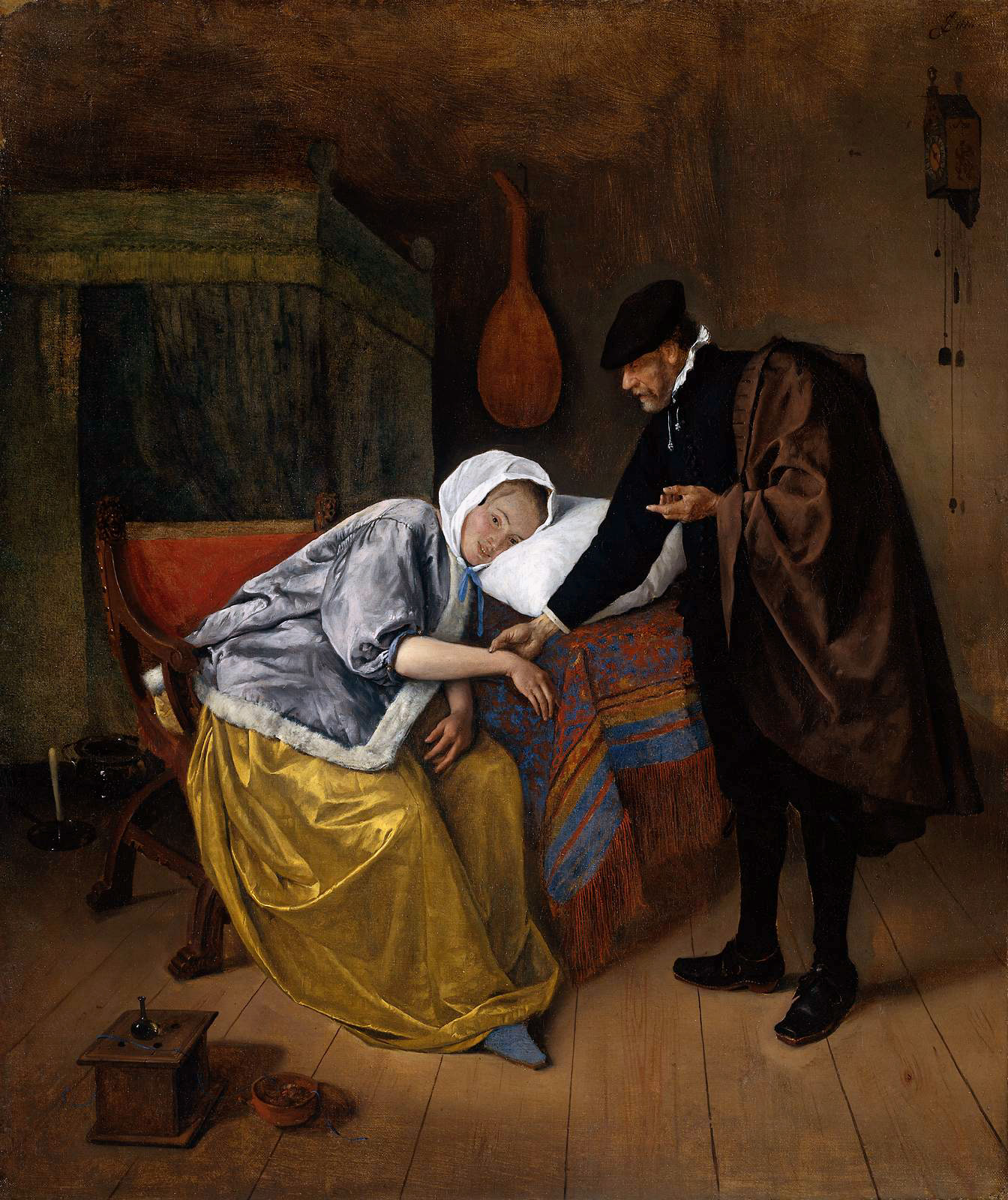
The Doctor's Visit by Jan Steen from 1600.  This woman is ill because her womb is moving about her body. The wooden box in the lower left is for fumigating her vagina.  It goes under her skirts.  

Since the womb was like an animal, it had needs and wants just like any another being.  The womb needed food and entertainment and if it didn’t have these things, it would move around searching for them.  Wandering wombs ate semen and their favorite forms of entertainment were sex and nurturing fetuses.  And additionally, like Aretaeus said the womb liked nice smells.  So if the woman was religious and wanted to preserve her chastity, the doctor may burn something that smells nice near her vagina or make her smell something really bad to chase the womb back to its proper place.  The most effective treatments were sex and pregnancy, though.  Doctors took this ailment seriously because if the womb did not return within six months, the woman would die.  

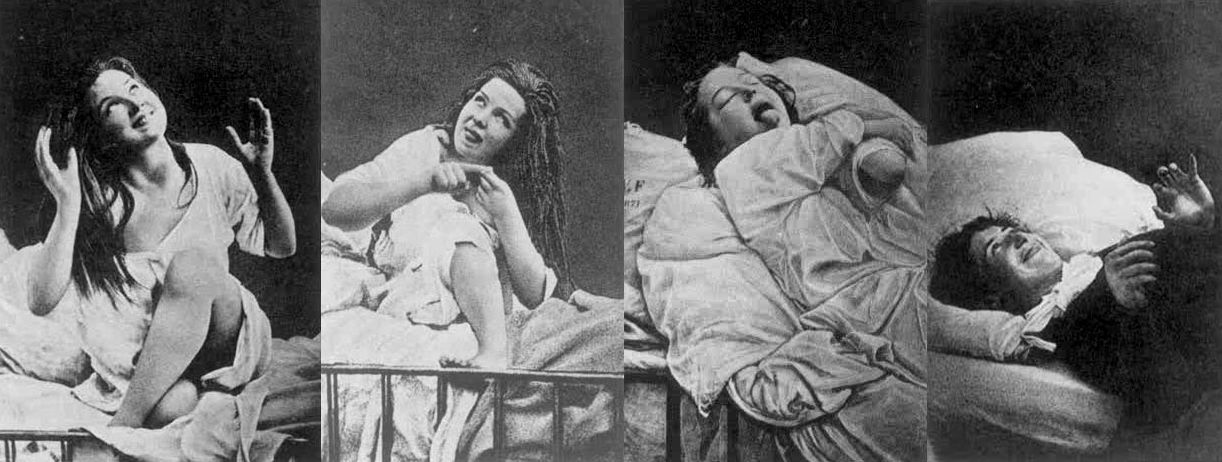
Hysterical women under hypnosis. 

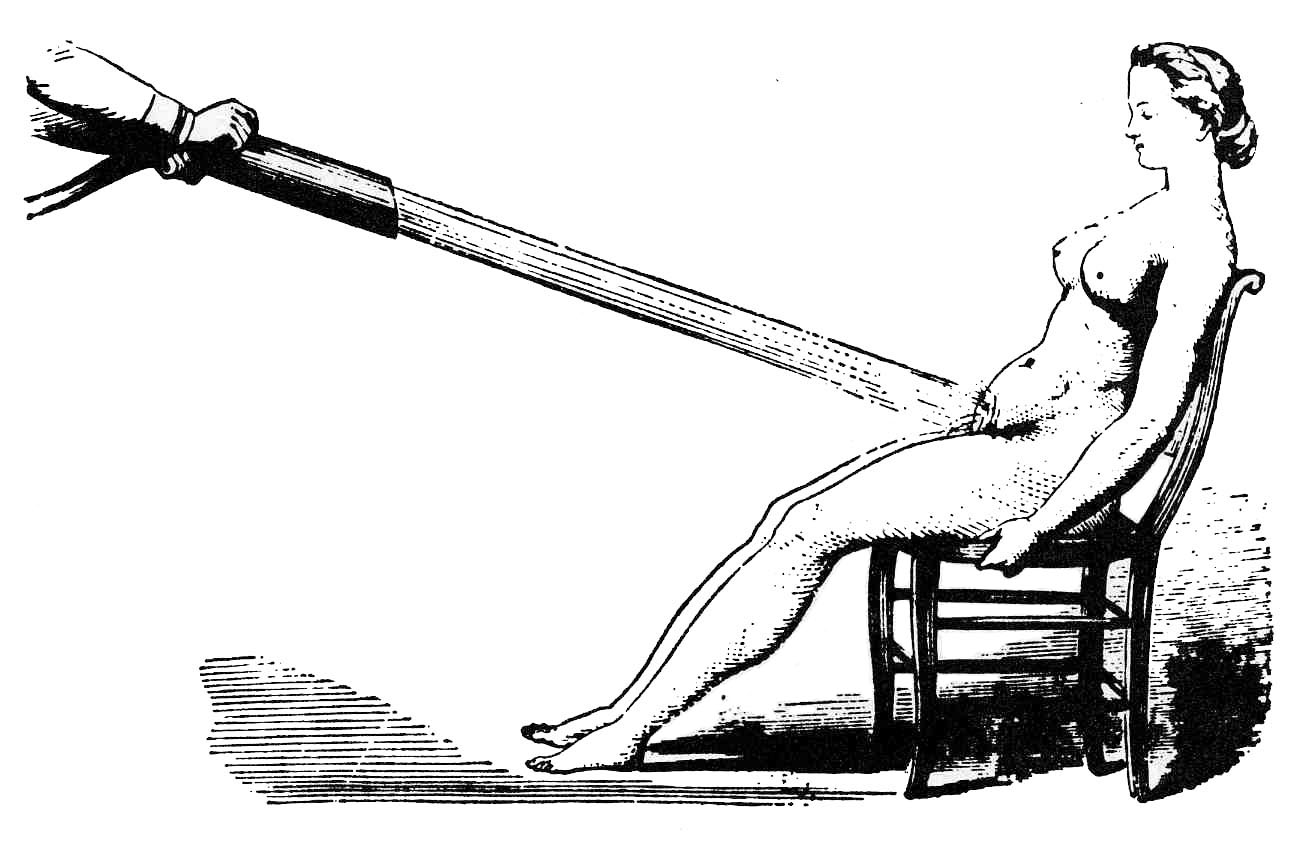
This belief made it all the way to the 19th century where it became known as hysteria.  So all those images of women fainting and being revived with smelling salts come from this medical belief.  Other treatments included hypnosis, vibrating devices, and jets of water aimed at the stomach.  During the 18th century and the age of the corset, the symptoms probably came from the tight corsets women wore.  Before this time, it was basically any sickness a female suffered.  


Illustration of water treatment for wandering womb. 

Up until Freud, most doctors believed the womb wandered.   Freud said even men get hysteria and claimed the problem was all in the mind, not in an animal-like womb.  

This theory kept women in check and absolutely dependent on men for their health.  Not only were all doctors men but the women needed sex and semen in order to be healthy.  Just another example of the misogyny that held women down.  

Women today can at least be thankful they do not have to worry about their wombs wandering around their bodies and causing all kinds of illnesses.  That’s one less thing we have to worry about.  

Friday, July 18, 2014

Fighting for Art History

The good news is that wisdom and knowledge do actually come with age.

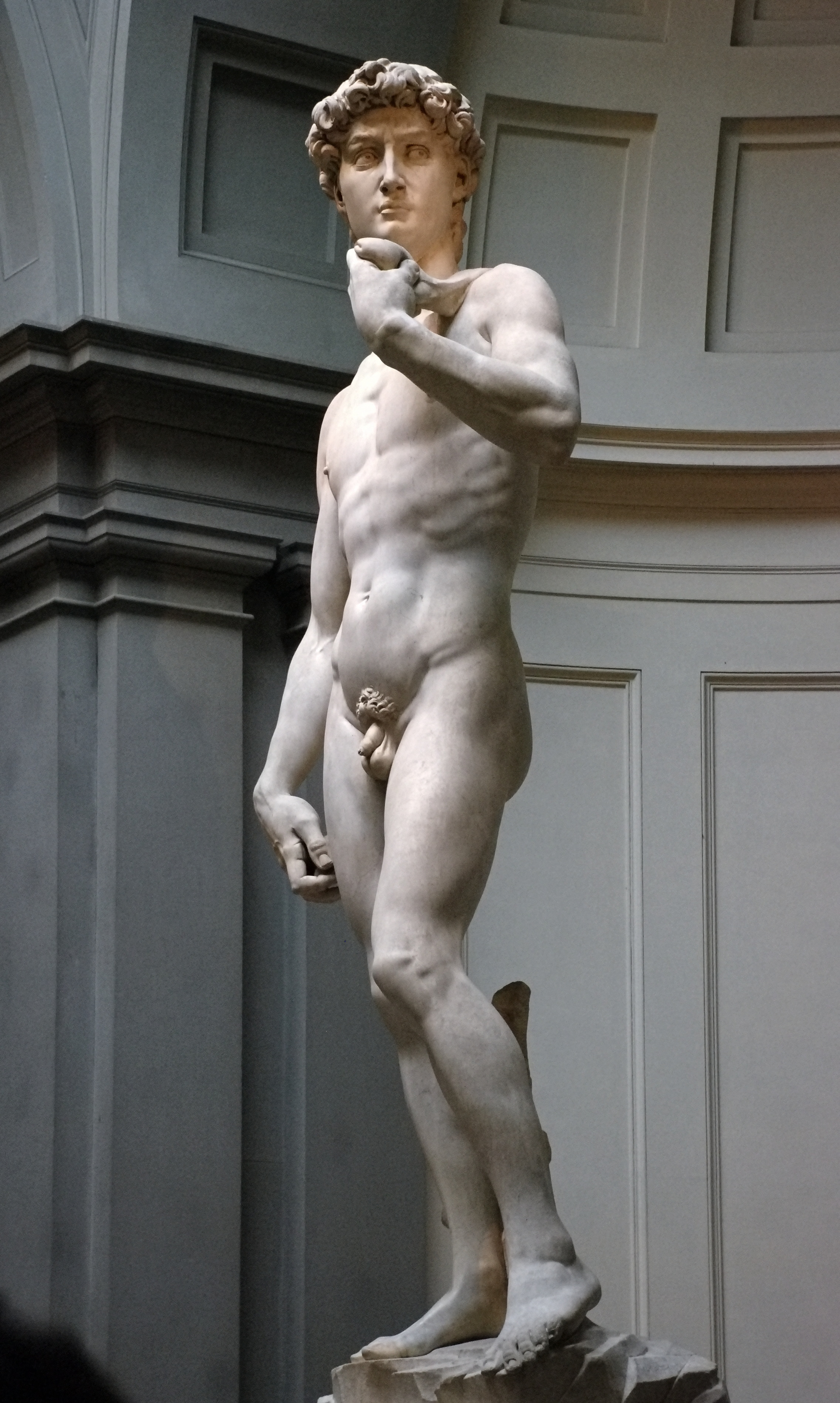
David by Michelangelo
Being from small town Alabama I have to explain what art history is almost every time I proclaim what my major was in school.  Most people still think I am just an artist and not a historian.  But also being from the South means the people are too nice to question my odd and unimportant choice, especially when you compare the abstraction of art to the very productive farming lifestyle that reigns in the country.  Because of this lack of understanding, I built an arsenal of reasons art is important.  It teaches us about the past, which teaches us about the present.  It provides a creative outlet for emotions.  It will make our souls grow.  The most important one is art reflects life.  It shows us how people live and why they struggle or seek pleasure.  Art teaches us how to live.  It is far more important than most people give it credit.  

At Syracuse’s Florence Convocation, my professor Dr. Gary Radke gave an excellent commencement address on the importance of art history.  This professor is the reason I slaved for two years in the arctic cold of Syracuse.  Dr. Radke mainly discusses Renaissance art history because that is the focus of the graduate program in Florence but his lessons and reasons apply to all art history.  His speech centers around the question and title “What Good Is a Degree in Renaissance Art History?”  Highlights from the video follow.


Dr. Radke begins by joking about the perks of getting a Renaissance art history degree: 
Let me start by giving a short and flippant answer to my question 'what good is a degree in Renaissance Art History?' It can land you a great gig in Florence.”
Travel is one of the great life enrichers.  It can take you out of your every day life and guide you to see a whole different perspective.  

He addresses the monetary reasons for receiving a degree.  He uses data to show art historians may not make the most money, but they do make money which increases as they work their way up.  He does this to devalue the material motivations and lead into some of the the real reasons:
Many people who majored in art history do not earn a great deal of money, but art history does not make you poor.  We, of course, would claim that it actually enriches both us and our society.”
He dismisses the monetary means and enters into the skills and insights art history teaches those who study it:
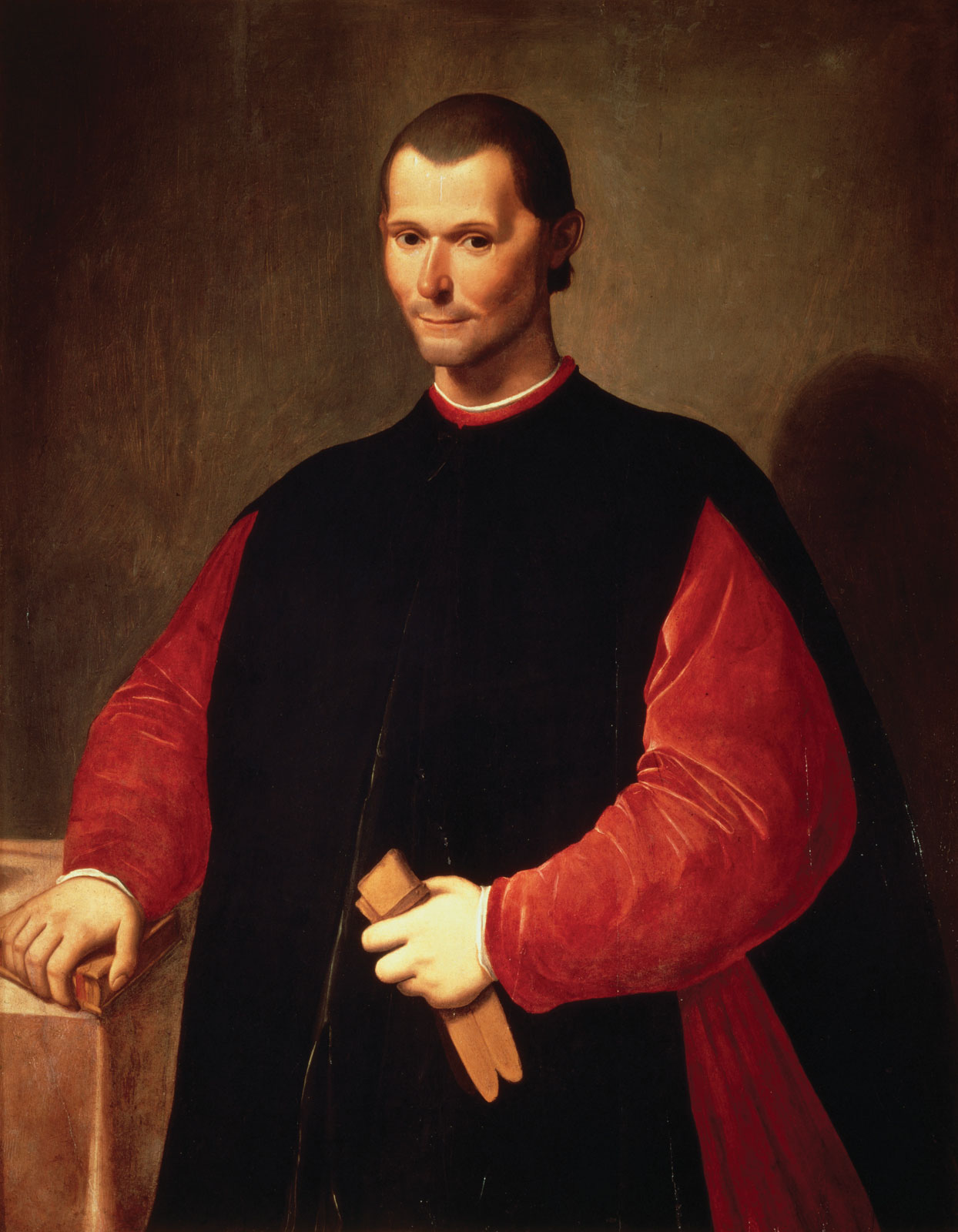
If we were to accurately and honestly address the question “what good is a degree in Renaissance art history?” We obviously need to make sure we don’t define words like ‘valuable' and ‘best' and ‘worst' primarily in monetary terms. First, I think we need to appreciate and celebrate how a degree in Renaissance art teaches us to see the world clearly and accurately.  Art historians pay attention to detail.  Not just to what is beautiful or pleasing but to how humans strategically use color, line, image, and space to manipulate one another and the world around us. Renaissance art historians are always alert to the fact that what we see and the spaces and buildings we inhabit make us feel certain things, believe certain things, sometimes buy certain things, often dismiss other things...Renaissance art historians learn both to appreciate the art and skill with which 15th and 16th century artists and politicians shaped their messages.  This was the age of Machiavelli after all. But we also take great care to resist and contest these images. We art historians unmask the structures of power.” 
Niccolo Machiavelli by Santi di Tito

We see images every day and it is important to understand how the visual affects us.  This is similar to the experiment Facebook conducted where they manipulated people’s news feeds to see the effect of positive or negative emotions on people.  Turns out we are more negative if we are exposed to the negative and more positive if exposed to positive emotions. We are easily influenced.  
Instead of just accepting these influences, art historians look at a visual image and ask why?  We do not just accept the image at face value; we want to dissect it and learn from it.  Visual images are made by people and generally every stroke, mark, shape, object is placed there for some reason and we want to find out why.  

For example take this image which provides a background for the speech:

The Last Supper by Taddeo Gaddi. Art historians ask why is John reclining in Jesus's lap?  Is it to show their close relationship?  Gaddi also doubly diminished Judas by placing him on the opposite side of the table and by making him smaller than the other figures even though perspective laws say he should be the largest because he is the closest.  Why did the artist need to diminish Judas so much?  It is so the audience will know he is the one who betrayed Jesus.  

Besides asking questions, art history teaches us to read critically:
Renaissance art history then teaches us not just to analyze the visual but to understand and appreciate the psychological and social as well. A degree in Renaissance art history also teaches people how to read critically.  In a world where words now fly around us at dizzying speed, people in art history are extremely well prepared to sort through the verbal den and ferret out what counts.  We read carefully and closely in order to learn how different people at different times looked and saw and understood things differently than we do. Reading frees us. Liberates us from myopic insular vision and inevitably enriches our own writing and communication as well.”
Reading allows people to enter into another’s thoughts and see another perspective and in turn readers empathize more.  
We treasure what we learn because we are inspired to look beyond ourselves and our own times and our own places to connect in some distinctly spiritual way with human beings who came before us and who left sweet fruits for us to contemplate and enjoy. Studying Renaissance art history changes and enriches lives.”
Vitruvian Man by Leonardo

To sum up and resolutely answer the question:
What good is a degree in Renaissance art history?  It teaches people to look creatively at the world around them.  It empowers us to embrace both the past and present. It makes us clear-eyed about how art, architecture, and everything visual can liberate and control us. It teaches us how to read and write critically and effectively.  It taps into our deepest spiritual dimension and it demands that we share our love and passion for the history and the art and the visual with others. I’m proud to say that Renaissance art historians do make mute stones speak. We give voice to the thoughts and ideas that our fellow humans wanted to record and share centuries before the days of digital reproduction, radio, or film.  In that way, a degree in Renaissance art history offers the joys of having the past continue to live through and well beyond us."

Plus, art history contains some pretty crazy images and ideas. See images about dancing babies in the womb, Medieval serial killer fashion, and books bound in human flesh.

Revisit this speech if you ever question the importance of art and the study of the past. 

Friday, July 11, 2014

Dancing, Tumbling, and Posing Babies in the Womb

I have a knack for enjoying the more salacious and little talked about aspects of art.  We may think of this as a taboo topic or even just a topic we do not literally think about much, but babies in the womb are all over the place from the political debate on abortion (stay out of my vagina) to pictures of ultrasounds posted on Facebook.  The medieval idea of the baby in the womb is pretty hilarious.  

This baby is doing yoga:


It’s going to be one calm and fit baby. (Disclaimer: this baby is probably not doing yoga. They probably don't know what yoga is in the 15th century.) Images like this one populate medieval manuscripts.  These illustrations show toddlers in the womb in silly classical poses.  I am not kidding.  This is what they believed babies were like in the womb!  The various poses do speak to their (and by ‘their’ I mean men) knowledge of the baby kicking. 


Manuscript 3701-15 created in the 9th-11th century from Muscio Medicus’ Musitio Gynaecia, a treatise on gynecology.
Before the Enlightenment, there were many interpretations on how the mysterious womb looked and functioned.  At one time they thought the uterus was the same as the penis except turned inside the body.  Another theory claimed the womb was divided into seven chambers, one for each day of the week.  This meant that up to seven babies could be born from one pregnancy.  


Notice these last two wombs have horns.  This is because doctors would autopsy animals and they just applied the structure to those uteri to humans.  
     
Another theory held on to the chamber idea but said there was only two: one for males and one for females.  They later adjusted it to accommodate a third chamber for hermaphrodites. 

Then the magnificent Leonardo came along and gave history this image:


It is slightly more accurate, but it was only a sketch and not seen outside Leonardo’s circle of friends.  So the ideas did not spread.  Historical gossip says Leonardo fished a drowned pregnant woman out of the Arno River in Florence and snuck her to an underground room to autopsy.  He had to keep it secret because it was against church law to cut open an innocent person because the body needed to be whole for the last judgment.  

Any knowledge of the human body came from very stiff public autopsies of executed criminals.  The doctor would read from a book which told what to do and a barber (because they were good with their hands and had similar utensils) would do the dirty work.  Any movement outside the book was not allowed.  

Imagine the terror of being caught Leonardo went through to acquire this image.  Imagine the stench of the decaying body, not on ice and probably in a closed stuffy room with no windows.  This image is a big deal for history because Leonardo experimented with the body and was able to view things most doctors never dreamed of.  

Renaissance artists dared to slice open the truth in their pursuit to realistically depict nature.  To accurately draw something, you had to understand it.  A true Renaissance man/woman is insatiably curious about all aspects of life.  A trait our focus-on-one-field culture needs to take into consideration.  Should we know a lot about a little or a little about a lot?  

For one, my curiosity knows very few limits (one being math, but if someone could explain how it works in the real world, I might like it).  Despite the saying "curiosity killed the cat," wonder is a good trait.  Diving into the mysteries of the female body just teaches people how it works and that leads to better health for females.  Diving into any mystery may have it's risks, but greater knowledge for all is usually the reward.  


Friday, July 4, 2014

Stars Falling from the Sky: Art History of Fireworks


Today, people in the United States celebrate the 4th of July typically with fireworks, cook outs, and drinks.  This yearly celebration occurs on the day we announced our independence from Britain.  In 1776, they marked this day with fireworks and we do the same today.  
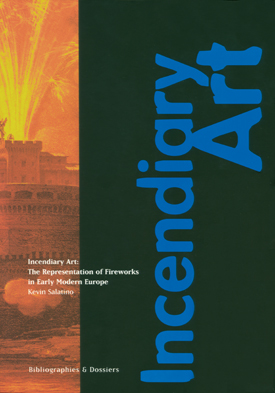
     For this holiday I read a Getty Museum catalog called Incendiary Art: The Representation of Fireworks in Early Modern Europe by Kevin Salatino (this is a FREE ebook and you can check out some more from the Getty).            

Fireworks are old, like 200 B.C. kind of old.  Rumor has it the Chinese developed the first firework, but India also had them pretty early on, so its up in the air.  The Chinese used the technology for weapons and rituals to keep away bad spirits, purely serious means.  But sometime during the Middle Ages trade increased with China and Europe figured out how to make fireworks as well.  Of course, they turned the pretty bangs of flowers into celebrations usually for weddings, births, victories, peace treaties, arrivals of important people, and even a king recovering health.  They turned fireworks into a giant spectacle often involving actors and elaborate narratives (something we are seriously missing today).  From the 15th to the 18th century these spectacles were part of Europe's celebrations, basically propaganda for the ruling party: 
"It is a crucial commonplace that courtly festivities served above all to exalt the principals of monarchy and dynasty, to demonstrate power through expenditure, and the underline the fundamental distinction between the court and the rest of society."  

The propaganda only reached a wider audience through prints and illustrations of these events sold to the public.  These images were often twice removed from the actual event because they might be drawn ahead of time or copied from another artist.  


Spectators often became part of the show as disaster stuck reigning down fire.  

One eye witness from London named Horace Walpole writes: 
"The rockets and whatever was thrown up into the air succeeded mighty well, but the wheels and all that was to compose the principle part, were pitiful and ill-conducted with no change of coloured fires and shapes: the illuminations was mean, and lighted so slowly that scarce anybody had patience to wait for the finishing; and then what contributed to the awkwardness of the whole, was the right pavilion catching, and being burned down in the middle of the show...Very little mischief was done, and but two persons were killed: at Paris there were forty killed, and near three hundred wounded, by a dispute between the French and Italians in the management, who quarreling for precedence in lighting the fires, both lighted at once and blew up the whole."

Just as often the audience appears bored by the fireworks.  They have seen this sort of spectacle many times before.  


But for all the danger and boredom, fireworks held a special place in society.  In the 18th century one play-wright wrote a encyclopedia entry naming fireworks as art:
"In all the Arts it is necessary to paint.  In the one that we call Spectacle, it is necessary to paint with actions."

This art served a purpose:
"A history of the early modern festival is a history of the frequently tense dialogue that characterized its negotiation between, among other things, the real and the fictive, the earthly and the celestial, urban space and sacred space, citizens and regent, city and empire.  That these negotiations were often successful in alleviating that inherent tension is a testament to the power of artifice." 

These events functioned on a political level: appeasing the citizens, showing of a monarch's grandeur, celebrating hard won victories. 

Some daredevils went a little too far with the fireworks spectacle and their daring feats turned into cautionary morals:
"'He who climbs high has far to fall, and he who loves danger will die in danger.' Thus, the 'famous surgeon' Dr. Carl Bernoju 'in a display of recreational pyrotechnics as artistic as it was wanton,' transformed himself into a human firework by means of 'many firecrackers and small rockets tied to his body and limbs, even on all his fingers.'...Dr. Bernoju descended a long rope, engaging in acrobatics as he self-immolated ('looking more like a burning devil than a man').  The spectacle ended, of course, in disaster, as the print demonstrates in a continuous narrative technique in which the doctor is pictured twicestill attached to the rope at the beginning of the routine, and in a pool of fire and smoke and broken limbs on the pavement below." 


This firework display served as a moral lesson to those who dared climb too high, to not be full of hubris. 

Another moral extracted from fireworks is the reminder of death.  Just like fireworks which reach high into the sky only to rain back to the earth extinguished, so too humans will eventually die:
"fireworks, whose brilliance so rapidly extinguished may here function as a kind of momento mori..."

But we in the U.S. would rather celebrate today with happiness and joy that we broke free and are known as a free country.  Hopefully, today we can band together and enjoy a shared love of being American.  

Throughout history fireworks have mesmerized, delighted, and even bored humans.  Fireworks are part of those few moments in life where a person is present in that exact moment without having to force themselves to focus.  Even if you've seen fireworks a thousand times, you still become mesmerized by the loud bangs, flashed of light and color, the shapes, and the ephemeral nature of the spectacle.  There in a moment the next falling out of the sky.   People watch waiting to see what shapes and color will appear as if by magic.  

But we know it is science pure and simple advances in technology and understanding the world.  Couple this day with a short explanation of the Chemistry of Fireworks. 


Friday, June 27, 2014

"The Gentle Art of Making Enemies:" Painter vs. Critic

In 1890, the painter James Abbot McNeil Whistler sued the art critic John Ruskin for libel.  This court case is an early example of an artist fighting for abstraction and the artist's right to say what art is.  Ruskin wrote, "I have seen, and heard, much of cockney impudence before now; but never expected to hear a coxcomb ask two hundred guineas for flinging a pot of paint in the public's face."  The well-known and respected critic claimed Whistler's Nocturne in Black and Gold was not a finished painting and Whistler had no right to exhibit or charge money for it.  The harsh criticism caused Whistler to sue.  The artist later published "The Gentle Art of Making Enemies," which detailed proceedings from the court.  In the exchange, Whistler appears very jaunty, polite, and entertaining.  He elicits many laughs from the court room.  The lawyers question him about the subject of the paintings, how long it took him to finish it, what certain paint splatters represented, and even arbitrarily asking if he left his paintings outside to dry.  

In an revealing comment on the Academy's control over art Whistler states: 
"I have sent pictures to the Academy which have not been received. I believe that is the experience of all artists."  
Whistler's statement suggests that being denied by the Academy was almost a badge of honor proving the person was an artist.  

Nocturne in Black an Gold: Falling Rocket

While being cross examined by the attorney-general, Whistler points out the subtleties of word choice in his title: 
"The nocturne in black and gold is a night piece, and represents the fireworks at Cremorne."
"Not a view of Cremorne?"
"If it were called a view of Cremorne, it would certainly bring about nothing but disappointment on the part of the beholders. (Laughter.) It is an artistic arrangement. It was marked two hundred guineas."
"Is not that what we, who are not artists, would call a stiffish price?"
"I think it very likely that that may be so."
"But artists always give good value for their money, don't they?"
"I am glad to hear that so well established. (A laugh.)"

The attorney-general attempted to nail down the value of the painting by asking Whistler how long it took him to paint it:
"Now, Mr. Whistler. Can you tell me how long it took you to knock off that nocturne?"
"I beg your pardon?" (Laughter.)
"Oh! I am afraid that I am using a term that applies rather perhaps to my own work. I should have said, How long did you take to paint that picture?"
"Oh, no! permit me, I am too greatly flattered to think that you apply, to work of mine, any term that you are in the habit of using with reference to your own. Let us say then how long did I take to--'knock off,' I think that is it--to knock off that nocturne; well, as well as I remember, about a day."
"Only a day?"
"Well, I won't be quite positive; I may have still put a few more touches to it the next day if the painting were not dry. I had better say then, that I was two days at work on it."
"Oh, two days! The labor of two days, then, is that for which you ask two hundred guineas!"
"No;--I ask it for the knowledge of a lifetime." (Applause.)"
Whistler's flourish at the end and the appreciation by the court room show the value of art is often much cheaper than the time it takes to paint.  And shows the thought artist's put into their work. 


Nocturne: Blue and Silver, 1871.

The picture called Nocturne: Blue and Silver was produced in Court and the lawyers attempt to identify where the bridge is:
"That is Mr. Grahame's picture. It represents Battersea Bridge by moonlight."
Baron Huddleston: "Which part of the picture is the bridge?" (Laughter.)
His Lordship earnestly rebuked those who laughed. And witness explained to his Lordship the composition of the picture.
"Do you say that this is a correct representation of Battersea Bridge?"
"I did not intend it to be a 'correct' portrait of the bridge. It is only a moonlight scene and the pier in the center of the picture may not be like the piers at Battersea Bridge as you know them in broad daylight. As to what the picture represents that depends upon who looks at it. To some persons it may represent all that is intended; to others it may represent nothing."
"The prevailing color is blue?"
"Perhaps."
"Are those figures on the top of the bridge intended for people?"
"They are just what you like."
"Is that a barge beneath?"
"Yes. I am very much encouraged at your perceiving that. My whole scheme was only to bring about a certain harmony of color."

Battersea Bridge today

Whistler's replies speak to the ambiguity of art and how the audience can determine the meaning.  This is my favorite aspect of art history: it can mean anything.  Art speaks to everyone, there are no language barriers, and there are multiple meanings. Art reflects life, 
With people still looking at abstract paintings and saying, "my kid could do that," we are still fighting for the acceptance of abstraction, the acceptance of the artist's right to decide what is art.  

Here Whistler bravely accepts his inability to change the Attorney-General's mind: 
"But do you think now that you could make me see the beauty of that picture?"
The witness then paused, and examining attentively the Attorney-General's face and looking at the picture alternately, said, after apparently giving the subject much thought, while the Court waited in silence for his answer:
"No! Do you know I fear it would be as hopeless as for the musician to pour his notes into the ear of a deaf man. (Laughter.)"

In the end Whistler won, but only $1.

What purpose does pointing out the negative achieve?  What does tearing down someone accomplish?  Not much. Maybe we should stop being so critical and start praising more. 


Friday, June 6, 2014

Bound in Flesh

In a lovely collaboration between history, science, and literature, Harvard University confirmed today that one of their books is bound with human skin.  No, you did not read that wrong.  As early as the 16th century people sometimes bound books with humans.  Now, do not think this is some morbid punishment for criminals or some thrifty black market trick.  People actually desired to be flayed and turned into books as a way to immortalize themselves.  

Arsene Houssaye's "On the Destiny of the Soul" front cover

The book, Arsène Houssaye’s “Des destinées de l’ame” (On the Destiny of the Soul), contains a note stating it was bound with skin from the back of a woman.  This woman was probably not someone who wanted to be immortalized since she was a mental patient who died of natural causes.  Since no one claimed her body, she was fair game for becoming a book.  A note found in the book reveals the reason for binding with this peculiar medium: 

This book is bound in human skin parchment on which no ornament has been stamped to preserve its elegance. By looking carefully you easily distinguish the pores of the skin. A book about the human soul deserved to have a human covering: I had kept this piece of human skin taken from the back of a woman. It is interesting to see the different aspects that change this skin according to the method of preparation to which it is subjected. Compare for example with the small volume I have in my library, Sever. Pinaeus de Virginitatis notis which is also bound in human skin but tanned with sumac.”

The patron, Dr. Ludovic Bouland, wrote this gruesome explanation and he was the one to bind it in human flesh.  Apparently, this bibliophile was quite a collector of books bound in human skin seeing as he had another one and was a connoisseur of the quality and elegance of such binding.  Being a doctor also allowed him access to bodies.

Despite the creepy, terrifying confirmation, I am sure Harvard is very excited about this discovery because these books are rare and the morbid curiosity of viewers will draw them to such a dark item.  This is especially fortuitous for Harvard because another book of their's believed to be bound in human skin just went through the same scientific experiments.  The scientists concluded the book was actually bound in sheepskin. 

Juan Gutiérrez’ Practicarum quaestionum circa leges regias Hispaniae front cover

People believed it was human because the book, Juan Gutiérrez’ Practicarum quaestionum circa leges regias Hispaniae (Madrid, 1605-1606), contains an inscription stating:

The bynding of this booke is all that remains of my dear friende Jonas Wright, who was flayed alive by the Wavuma on the Fourth Day of August, 1632. King Mbesa did give me the book, it being one of poore Jonas chiefe possessions, together with ample of his skin to bynd it. Requiescat in pace.”

Maybe King Mbesa lied and just gave him sheepskin and wanted to keep the human skin for himself or maybe the king found it disgusting.  Maybe the dear friend Jonas was actually a sheep and this is just a creepy dedication to a pet.  No one knows as of right now.  

Another book bound in human skin exhibits a different reason for binding a book with a piece of someone.  This book is found in Surgeons' Hall museum in Edinburgh, England.  It is a pocket sized book with faded gold lettering saying ‘EXECUTED 28 JAN 1829’ and ‘BURKE’S SKIN POCKET BOOK.’   The binding on this book is William Burkes, a famous 19th century murder who killed 16 people to sell their bodies to anatomists.  Ironically, Burke was convicted, hung, and publicly dissected.  

William Burke front cover


Can you imagine holding and reading a book bound in human skin? Does is make your skin crawl?  Of course, today's views on such a subject are vastly different from opinions back then.  This is another example of the crazy, quirky, morbid aspects of history that most people would find appalling now 

Friday, May 30, 2014

#YesAllWomen, Misogyny, and the Middle Ages

 A week has gone by since the Isla Vista shooting and thankfully misogyny is still a topic of conversations.  I say thankfully not because we still have to address misogyny in 2014, but because it is being discussed and maybe change will come of it.  The trending Twitter hashtag #YesAllWomen responded to a misogynist shooter by pointing out women's struggles and fears.  Often women are accused of being the problem instead of how men handle their desires.  When these shootings happen, have we been missing a point?  That these shooters are hurting, because they feel entitled to gain something from the world whether that is the ideal woman, power, or attention.  

In the beautiful words of Maya Angelou, who we lost this week:
"I’ve always had the feeling that life loves the liver of it. You must live and life will be good to you, give you experiences. They may not all be that pleasant, but nobody promised you a rose garden. But more than likely if you do dare, what you get are the marvelous returns."  
We are not entitled to anything, but the tradition of misogyny teaches some men they are. 

     Misogyny is nothing new.  History is full to the brim of misogynist stories, events, and societies. It existed before the middle ages, but women lost a lot of ground with the advent of Christianity.  The very beginning of Christianity blames one woman for all the suffering and work in the world because Eve ate the apple.  One woman's mistake led to all women being inferior to men.  Of course, other factors contributed to misogyny like medical beliefs, established traditions, and biological circumstances of caring for children. 

Temptation of Eve

     Misogyny in the middle ages existed in the usual formats of rants against women.  One very famous poem The Romance of the Rose by Guillame de Lorris and Jean de Meun exhibits several instances of misogyny.  The storyline of the Rose involves a dreamer transported into a garden where he meets numerous allegorical figures and falls in love with a rose.  The personification Jealousy hears of the Lover's desire and imprisons the Rose in a castle.  The Lover wanders around receiving advice from various characters until the God of Love appears to help him.  They storm the castle and the Lover experienced one erotic night with his Rose before he wakes up.  

Opening page of Ms 25526 The Romance of the Rose, from the National Library in Paris.

     During the Lover's wandering, he meets Friend who tells the story of a Jealous Husband.  This character embarks on a rant about the failings of women.  The husband goes so far as to call the wife a 
“lady slut…riotous, filthy, vile, stinking bitch.”  
The shooter called women sluts, but his source of pain was his inability to have sex or be loved by them.  Stating women freely give out sex and then complaining about how hard it is to have sex is contradictory. This insult is also found in medieval writings.  Where the man complains about how lustful women are, but he also teaches all these tips for deception in order to have sex with women.  If women are so lustful, why do men have such problems with having sex?  It is time to stop slut shaming and confront the real problem of a misogynist culture. 

Woman Pulling Man by Rope Attached to His Penis from the margins of Ms 25526 in the National Library, Paris

The Jealous Husband further takes insults toward his wife and extends lustful characteristics to all women:
"All you women are, will be, and have been whores in fact or in desire,
for, whoever could eliminate the deed, no man can constrain desire.
All women have the advantage of being mistresses of their desires."
Friend uses the Jealous Husband as an example of bad conduct and as a warning women will treat men badly if men are cruel to them.  Friend states that men serve and please women in order to marry them, but once they are married, they expect the women to serve them.  This change in treatment causes the misogyny in men and the naughty behavior in women.  Friend’s ultimate advice to seduce women is to complement their beauty, no matter how ugly.  This counsel assumes that women are shallow and easily fooled by compliments.  He also states that men should avoid correcting women because 
“they have minds so constructed that it seems to them that they do not need to be taught their trade.” 
This statement posits that women have differently built minds than men and are born with this stubbornness. Even though Friend advocates good treatment of women, he does so in a misogynistic and condescending way. 

     Misogyny further appears in the Rose during the author's apology to justify his misogyny.  Meun abruptly stops the third person narrative and changes to the first person for his explanation: 
“any words that seem critical and abusive of feminine ways, then please do not blame me for them nor abuse my writing, which is all for our instruction.”  
This shows that Meun knew and worried about his abuse of women.  Even though he apologizes or defends himself, he is condescending to woman because he believes his negative comments about women will teach them to not act that way.  He further excuses himself by saying that he merely cited previous authors showing the large scale misogyny in the middle ages. 


Despite the trending topic, discussions on misogyny are sadly always relevant.  Among other things, history shows us the mistakes of the past.  Here we are 800 years later still dealing with the same problems.  There was misogyny in the middle ages and there is misogyny now.  Have we progressed and learned as a society?  Yes, but we still have miles to go. 


Couple this with the "Oppressed Majority" parody that chronicles a switch in the gender roles: